
The doors to Kemo Sabe, Aspen’s cult Western wear store, have just opened, and the space is already buzzing like a Nashville honky-tonk. George Strait croons “Cowboys Like Us” over the speakers as half a dozen women wearing shiny cowgirl boots grab colorful plumes, vintage pins, and branding irons to personalize beaver and rabbit-fur hats. A shopper swaps her heels for a pair of low-cut Stallion Zorro boots crafted from blue python, while others browse glass cases filled with vintage turquoise jewelry and exotic leather hatbands. The store’s VIPs are ushered past a velvet rope and up a set of stairs to a tin-coffered bar already serving stiff drinks.

When Tom and Nancy Yoder founded Kemo Sabe in 1990, they had one mission: turn everyone into a cowboy. They never imagined their high-crowned, wide-brimmed hats would become Aspen’s most essential accessory, worn by everyone from the valets at Hotel Jerome, Auberge Collection, to snowboarding stars like Shaun White. The joke around town is that the overhead bins on flights to and from Pitkin County Airport are always full because everyone is traveling with their Kemo Sabe.
Despite the spectacle, Kemo Sabe remains devoted to preserving American craftsmanship, says Wendy Kunkle, who purchased the shop from the Yoders in 2020. The company’s hat ranch has since moved from Basalt, Colorado, to Gainesville, Texas, but each hat under the brand’s Grit label is still handcrafted using a century-old process that requires 150 steps from start to finish.
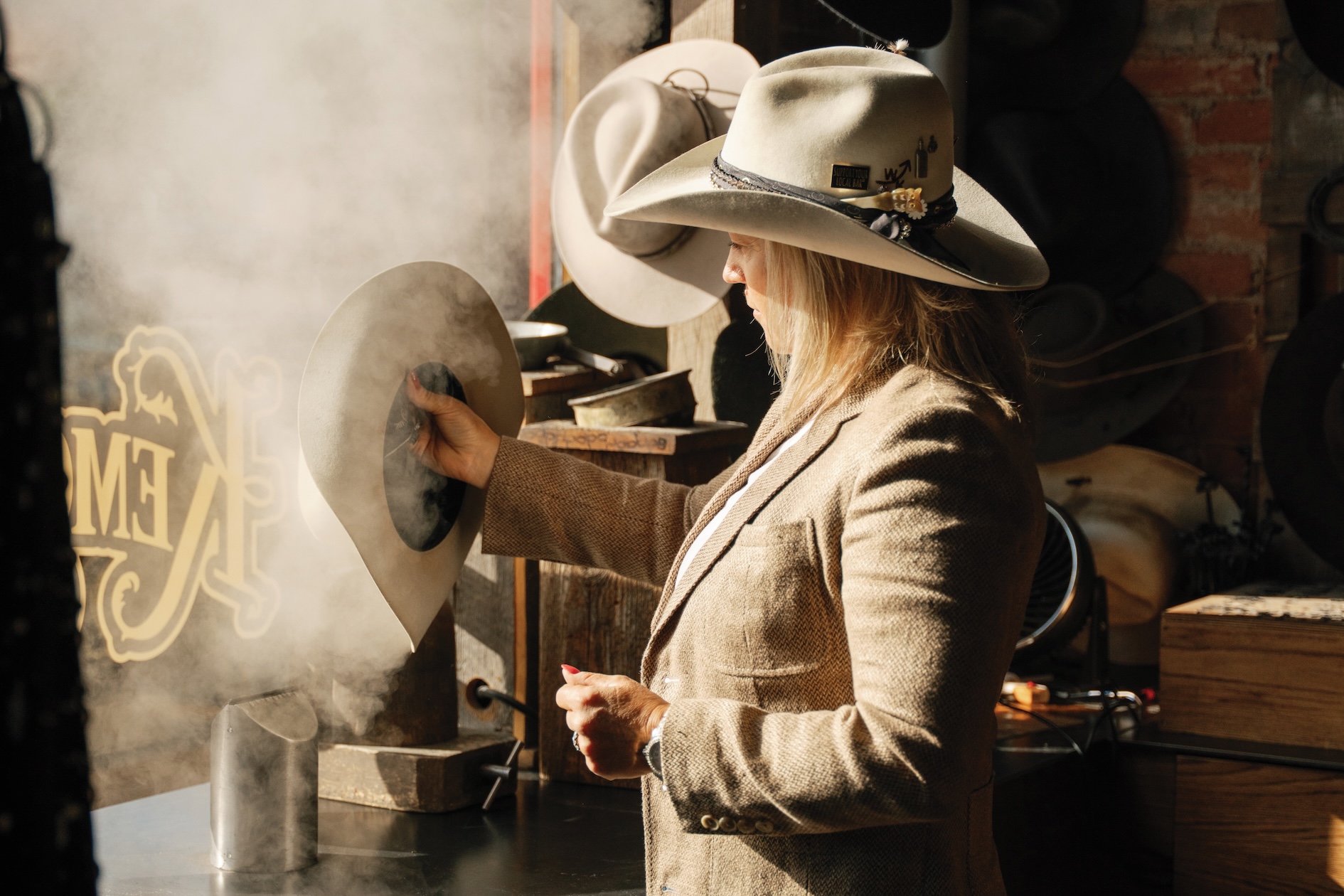
Black and silverbelly—a distinctive silver-gray—are traditional cowboy hat colors, but Kemo Sabe crafts hats in unorthodox shades too, from bold magenta to cornflower blue. Kunkle considers it a democratization of the cowboy look. “There is no right or wrong style,” she says. Even more important is the hat’s shape, which is steamed to fit the wearer’s head like a glove. Customers can choose from three styles: the classic Cattleman, featuring a tall crown with three creases; the flat-brimmed Cavalry; or Kunkle’s favorite, the Gus, with a tall crown and sloping center crease.

While the shape and fit of Kemo Sabe’s hats follow Western hat-making tradition, the store’s accessories bar is liable to stop a classic cowboy in his spurred boots. Drawers overflow with satin and velvet ribbon; glass bottles are stuffed with partridge, peacock, and ostrich feathers; vintage matchbooks and cards are stacked by the dozen; and racks display hatbands made from old horse reins, brass bullets, and even a $3,600 braided leather band with 14-karat gold and black diamonds crafted by jeweler David Heston.
Kunkle acquired the J.B. Hill boot factory in El Paso, Texas. Now called Kemo Sabe True Grit, it still employs most of the original factory bootmakers.

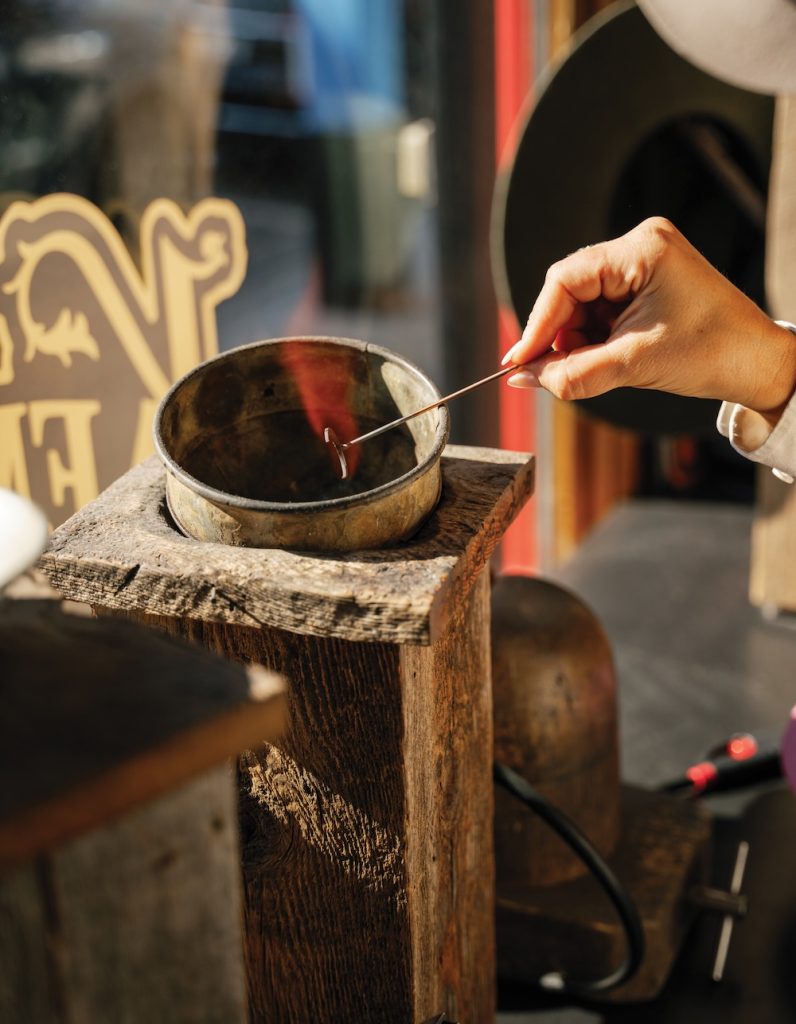
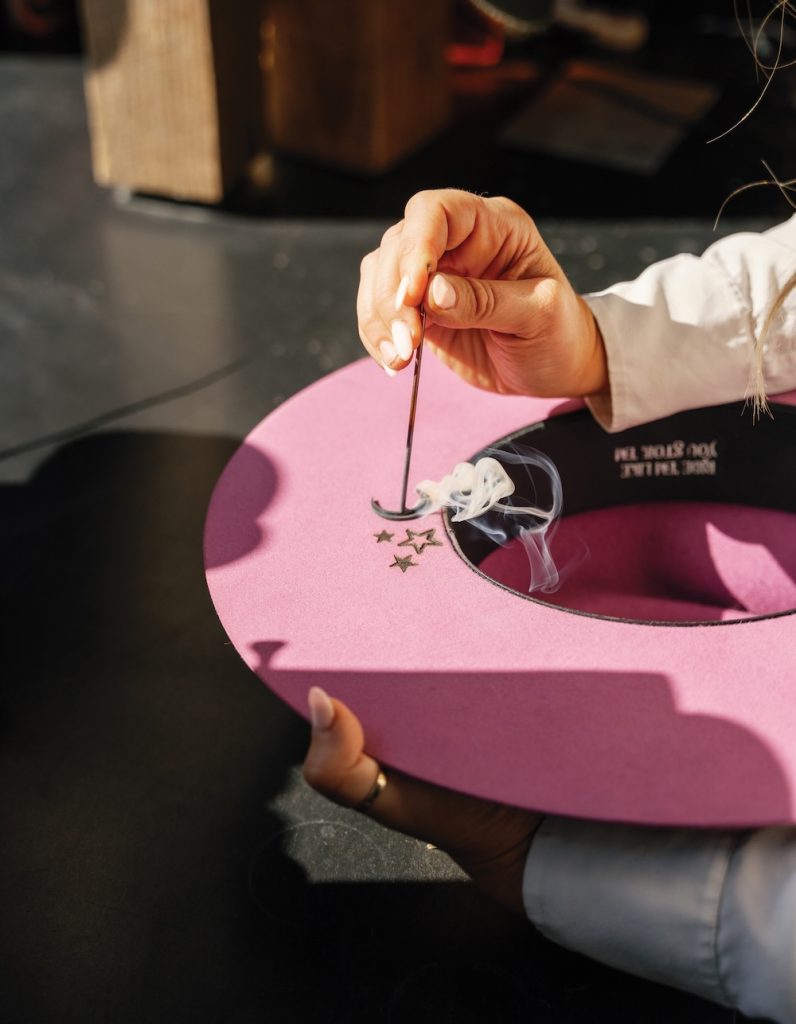
Kemo Sabe is known for its bespoke hat branding, which includes everything from initials to moon-and-stars decals.
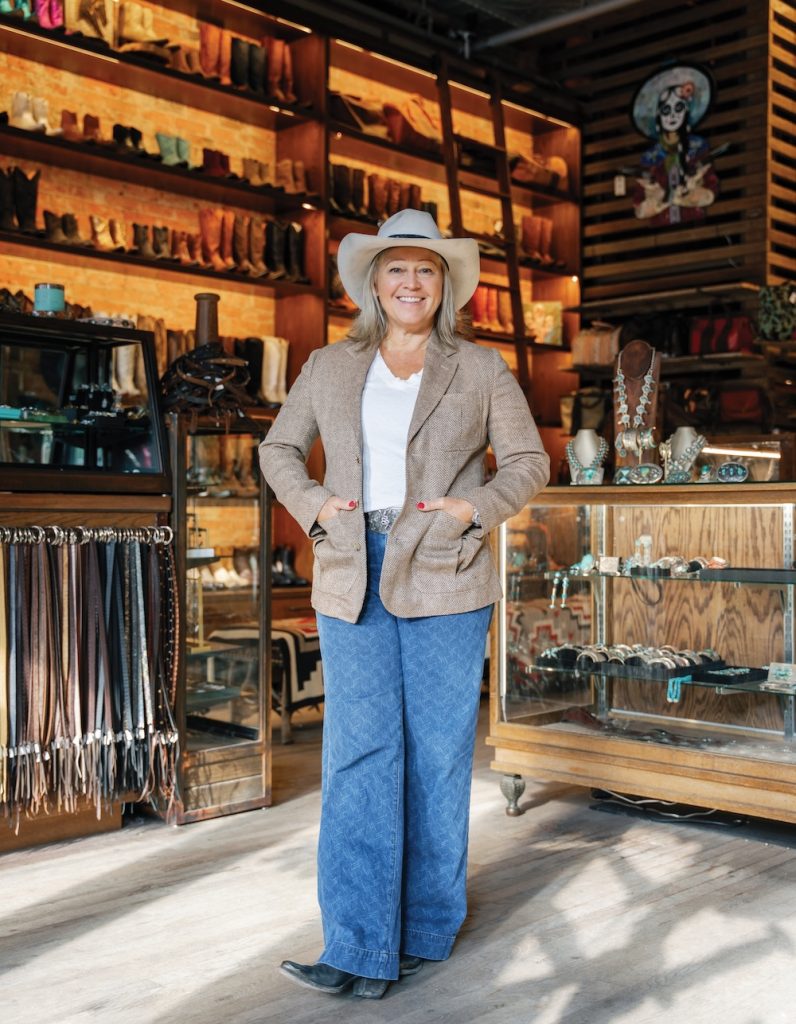
Kemo Sabe owner Wendy Kunkle says she feels naked without her classic silverbelly Gus-style cowboy hat.
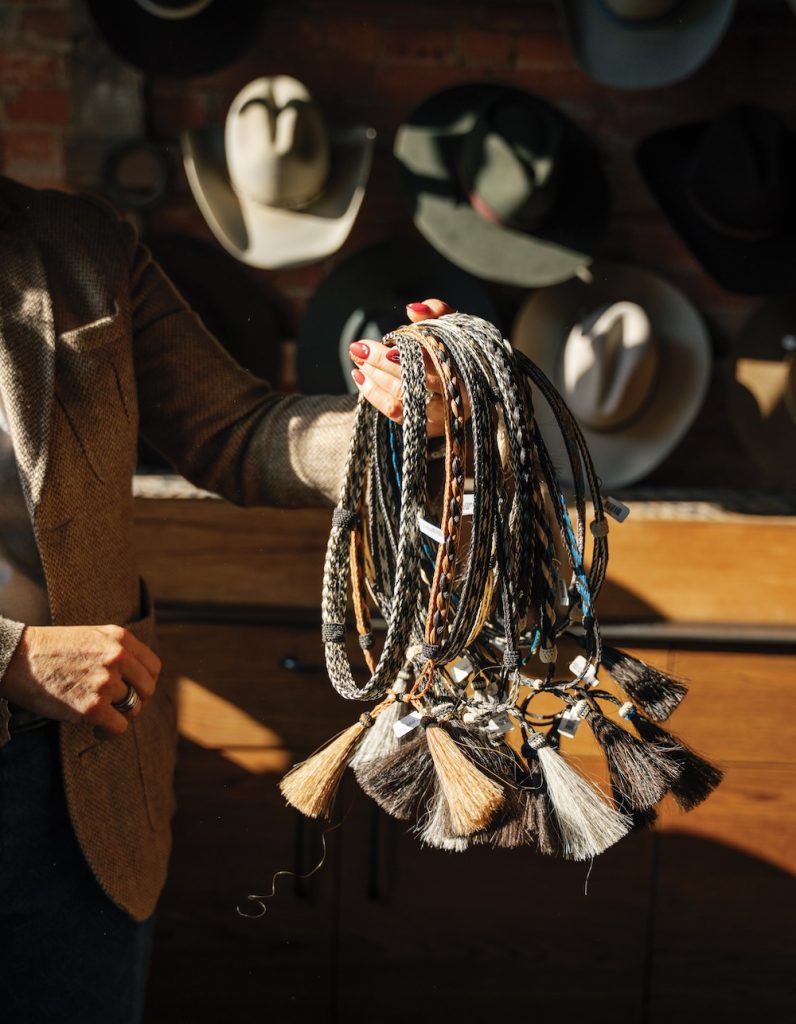
Hatbands are crafted from rare materials such as hippo hide and black diamonds.

Many of those accessories come from American artisans, whose work and legacy Kunkle hopes to preserve through Kemo Sabe. She commissioned Oklahoma jewelers Stacey and Chris DeGraffenreid of Love Tokens to make sterling silver hat pinches and pins in whimsical designs like a pair of skis and a martini glass. Georgia-based craftsman Jake Asuit is another creative partner who forges gorgeous Damascus steel hat knives with handles fashioned from mammoth tusks and mother-of-pearl. Wyoming leatherworker Trajan Vieira fashions hand-tooled and filigreed leather belts. And the Texas-based Bohlin family restores antique buckles, including those once worn by Western royalty like John Wayne and Clark Gable. In 2021, Kunkle also acquired a boot company in El Paso, Texas, to produce True Grit boots, which are stocked alongside other designers such as Montana’s Canty Boots.
As Kemo Sabe spreads beyond Aspen to other Western meccas in Utah, Texas, and Montana, Kunkle remains committed to extending the genre’s heritage with a new generation of artisans.
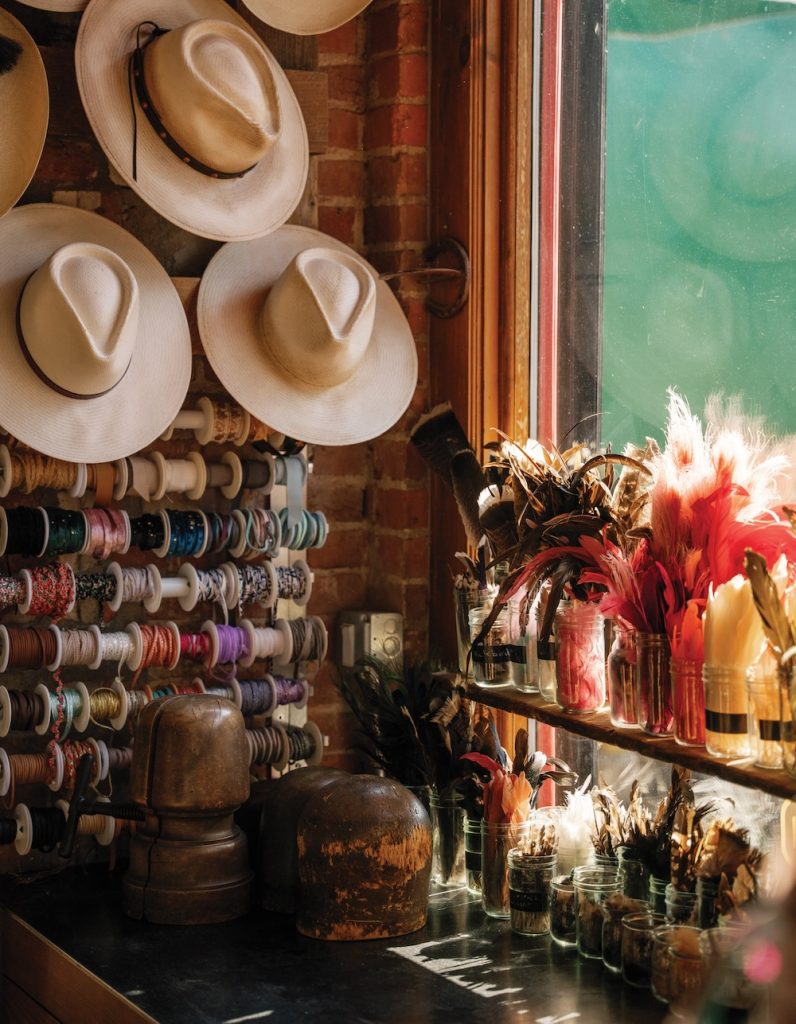
Kemo Sabe’s accessory bar stocks dozens of shades of plume and ribbon in materials ranging from satin to silk, as well as vintage pins, matchbooks, and cards.
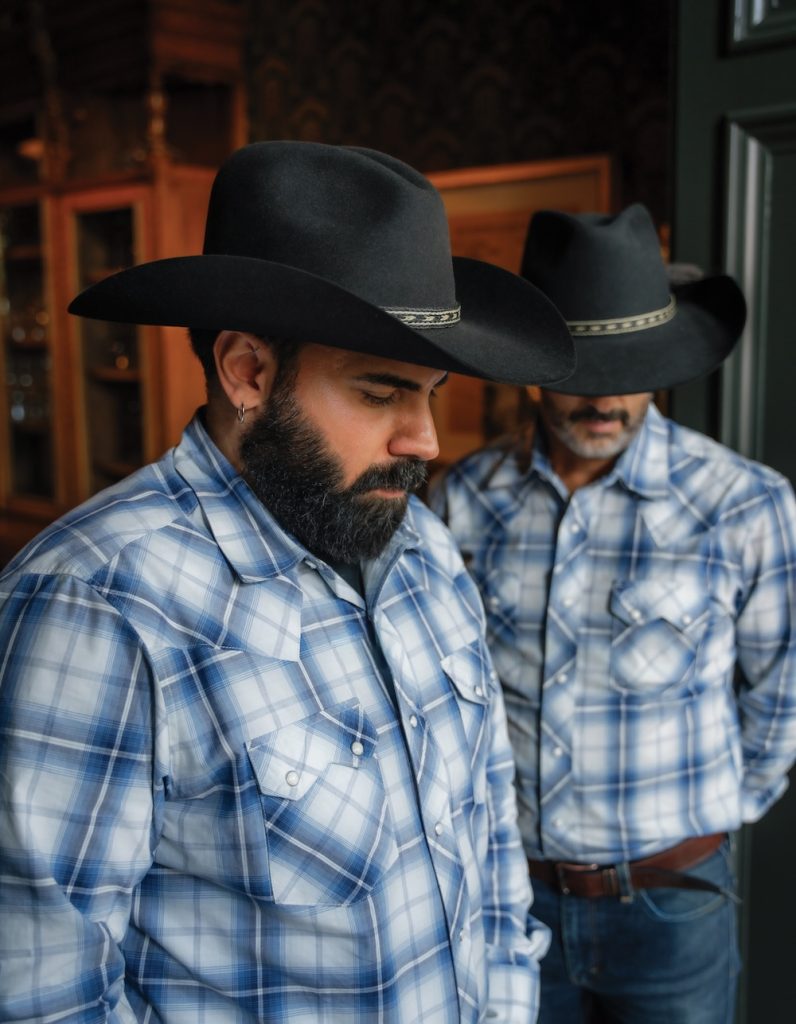
Hotel Jerome, Auberge Collection team members don Kemo Sabe cowboy hats, which include a custom HJ brand on the inside brim.
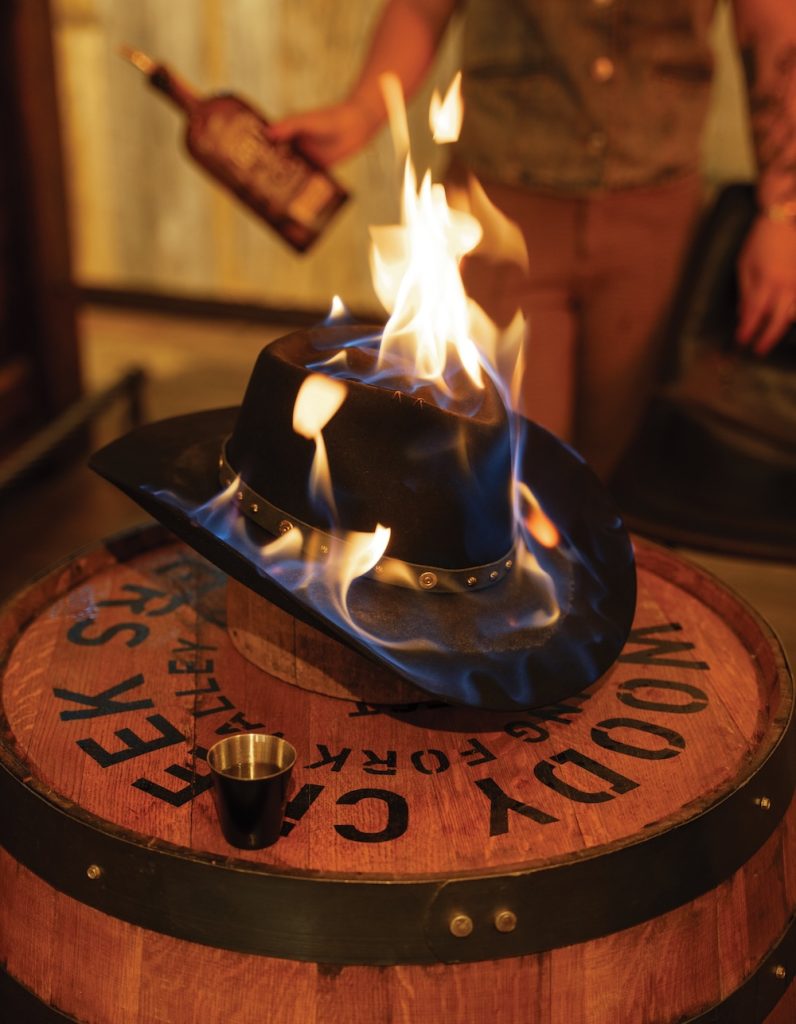
No flaws allowed. In the shop’s upstairs bar, an imperfect hat is doused in the brand’s newly released True Grit tequila and set aflame.
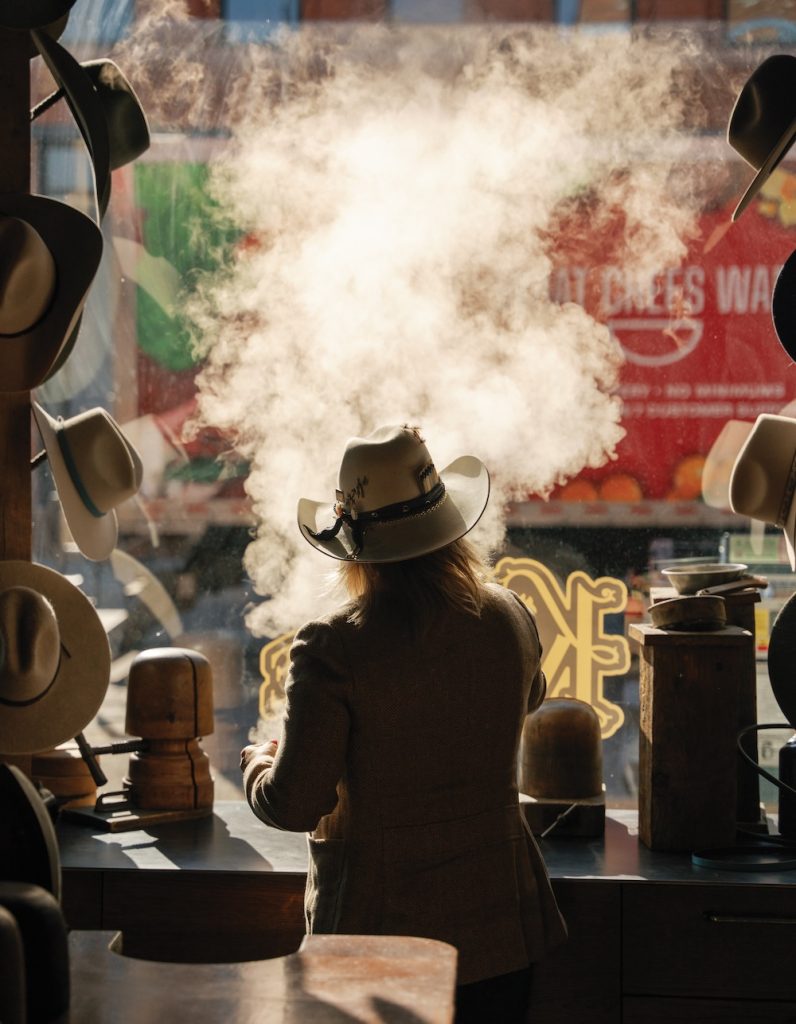
Hot steam is the secret to a perfectly molded cowboy hat.
