
Gilded crowns and jeweled tiaras may come to mind as the most precious royal adornments of yore, but in ancient Hawai‘i, bird feathers were the prized embellishment of the monarchy. Coveted symbols of respect, dignity, and strength, they were reserved only for ali‘i (chiefs). Thousands of iridescent, patterned plumes were layered onto intricate (standards), lei, ‘ahu ‘ula (capes), and mahiole (helmets). King Kamehameha I’s own ‘ahu ‘ula—a five-foot-tall, yellow-and-red masterwork composed of nearly a quarter-million feathers—is said to have required seven generations to craft.

“In ancient Hawai‘i, feathered adornments and standards not only represented status in society as a royal, but also signified them as gods walking on earth, because birds, of course, are closer to the heavens,” says Auntie Anna Akaka, a lei hulu (feather lei) artisan. “Today, it is still a part of our history that’s very near and dear to us as Hawaiians.”
While flower lei remain a prolific part of Hawaiian culture, says Akaka, feathers have nearly disappeared from the medium. But a new generation of local lei hulu artisans is rejuvenating the ancient craft.
Lei hulu, or feather lei, were a symbol of royalty in ancient Hawai‘i. Today, the art of making them is perpetuated by only a few devoted masters.

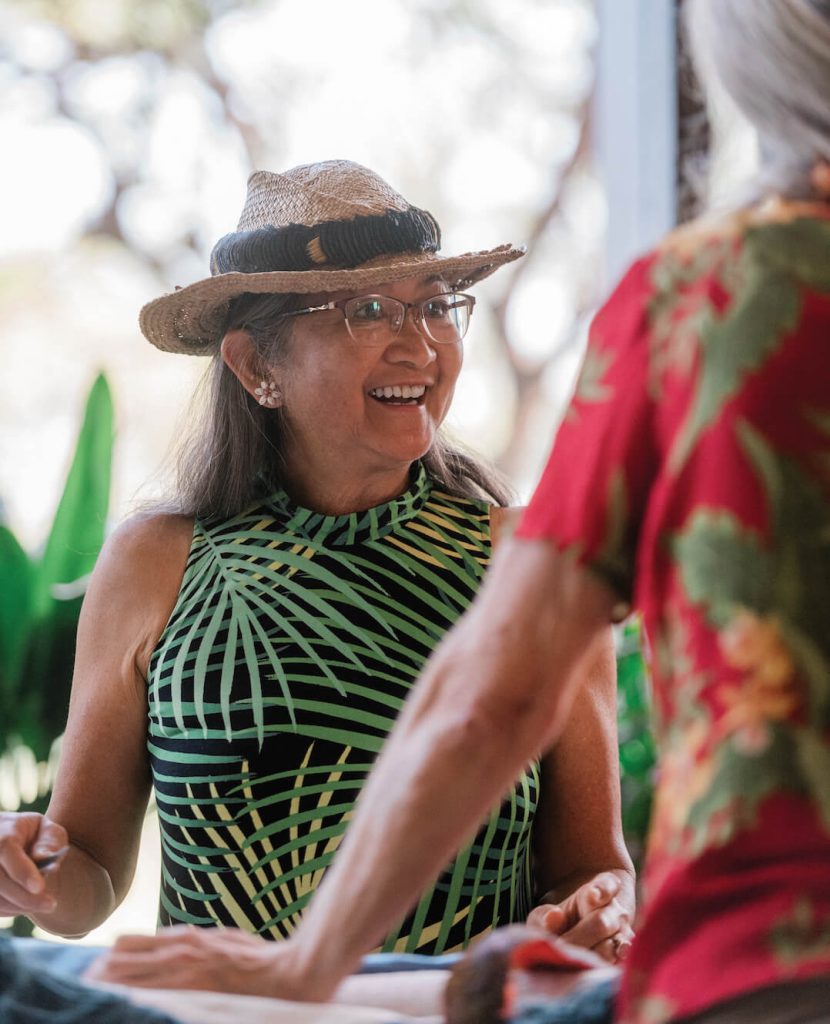
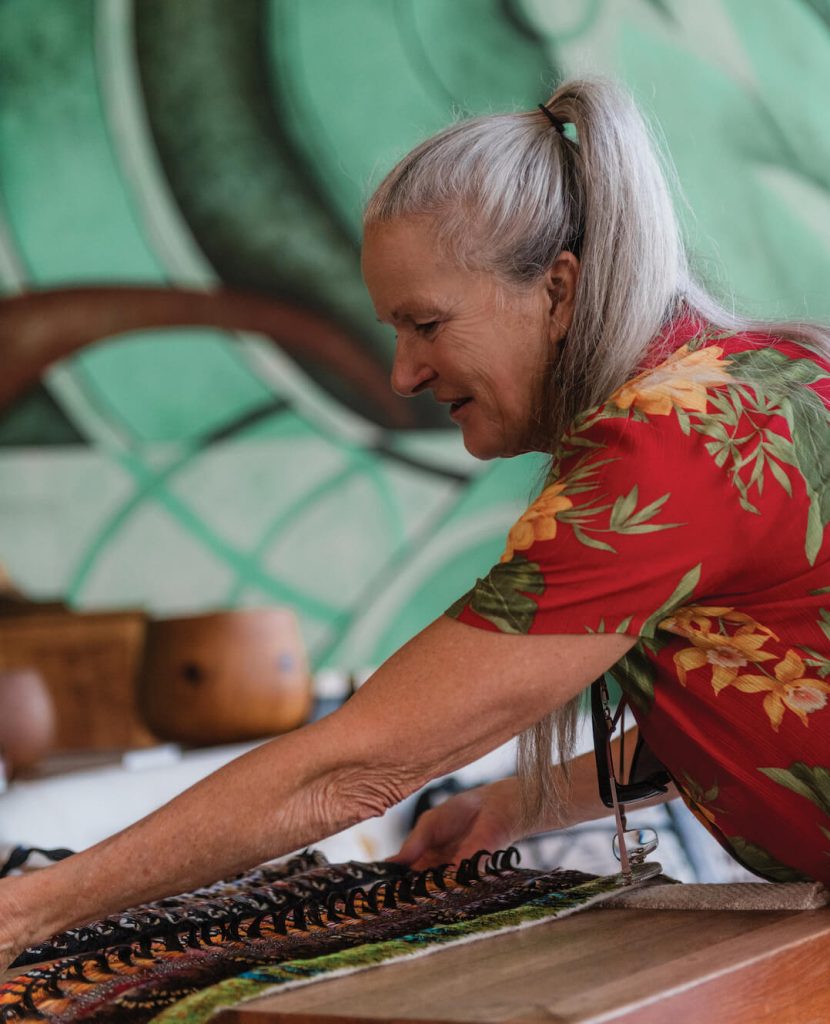
Auntie Anna Akaka prepares feathers for a lei at Mauna Lani, Auberge Collection.
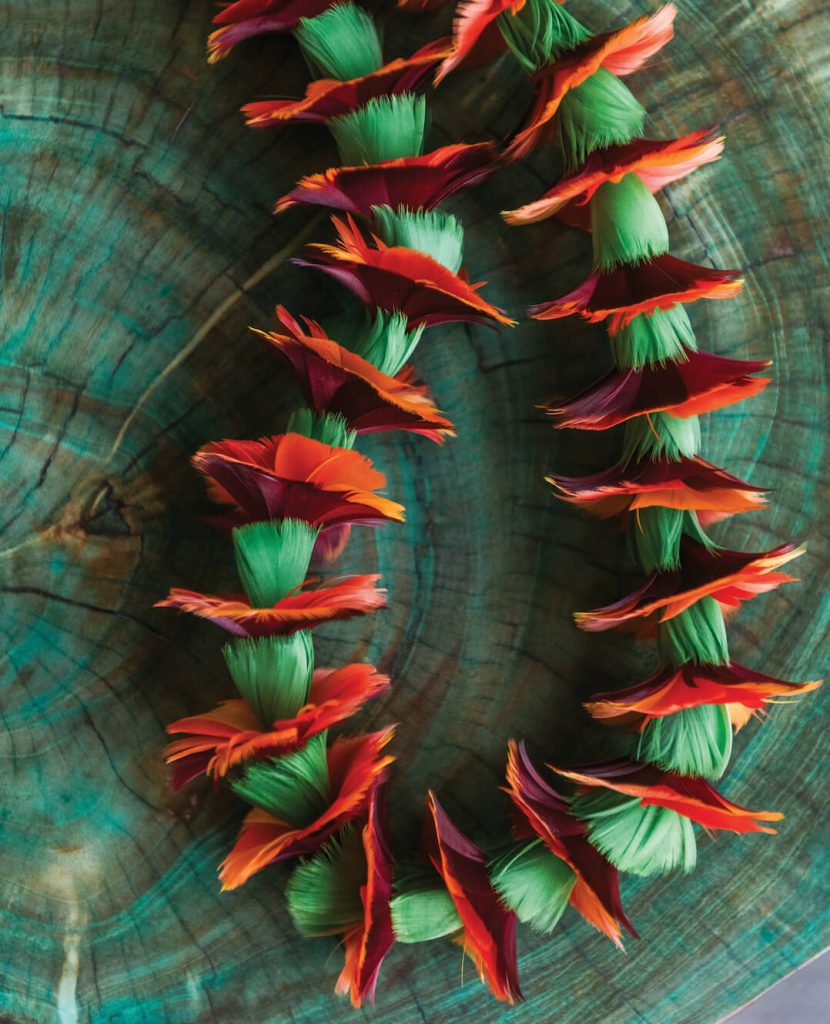

D’Arcie Beytebiere was captivated when she first glimpsed historic lei hulu at the Bernice Pauahi Bishop Museum in Honolulu. “I was amazed by the patterns and colors, and the addition of the texture was just astounding,” says the artist, who formerly worked with mediums such as glass and textiles. Beytebiere began searching for someone who could teach her the craft. “It’s an art form you have to learn from a master, and it took me a year to find one. I really felt like I was pursuing a dying art.”
Under the tutelage of two artisans—the first a teacher who taught her the basics in an elementary school classroom, and the second Auntie Doreen Henderson, whose advanced techniques and variations have been passed down from generation to generation, orally and manually—Beytebiere was able to master the craft herself.
Today, she is carrying on the legacy of Hawai‘i’s ancient craftspeople, and even innovating it, with modern humu papa (feather bands) to adorn hats and other more contemporary applications. The skills behind each of her creations, however, are virtually unchanged from centuries ago. It’s tedious work, plucking, washing, and drying the feathers, trimming them to identical shapes and sizes, and preparing the fibers. Only after these hours of labor will the real crafting begin. Making a single lei may take weeks, even months (and for someone less skilled than Beytebiere, possibly years).
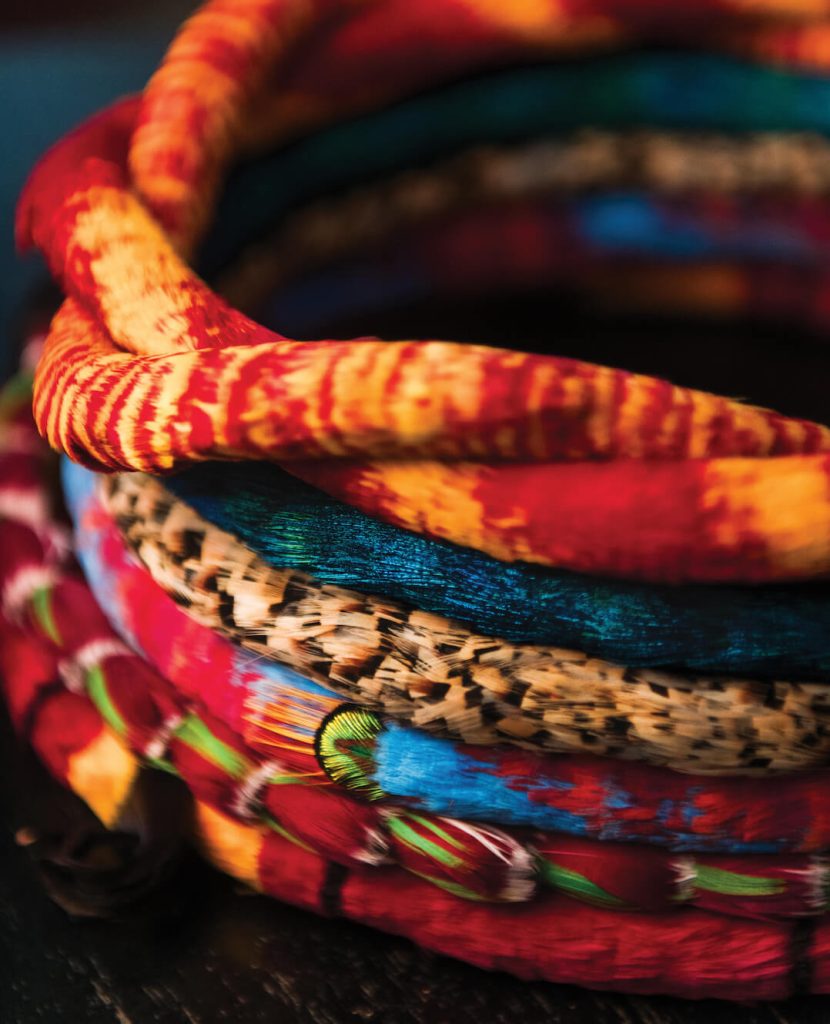
D’Arcie Beytebiere’s feather creations span from traditional styles to more contemporary humu papa (feather bands).
Beytebiere was inspired to take up the art of lei hulu when she saw ancient feather adornments exhibited at a Honolulu museum.

Today, she is carrying on the legacy of Hawai‘i’s ancient craftspeople, and even innovating it, with modern humu papa (feather bands) to adorn hats and other more contemporary applications. The skills behind each of her creations, however, are virtually unchanged from centuries ago. It’s tedious work, plucking, washing, and drying the feathers, trimming them to identical shapes and sizes, and preparing the fibers. Only after these hours of labor will the real crafting begin. Making a single lei may take weeks, even months (and for someone less skilled than Beytebiere, possibly years).
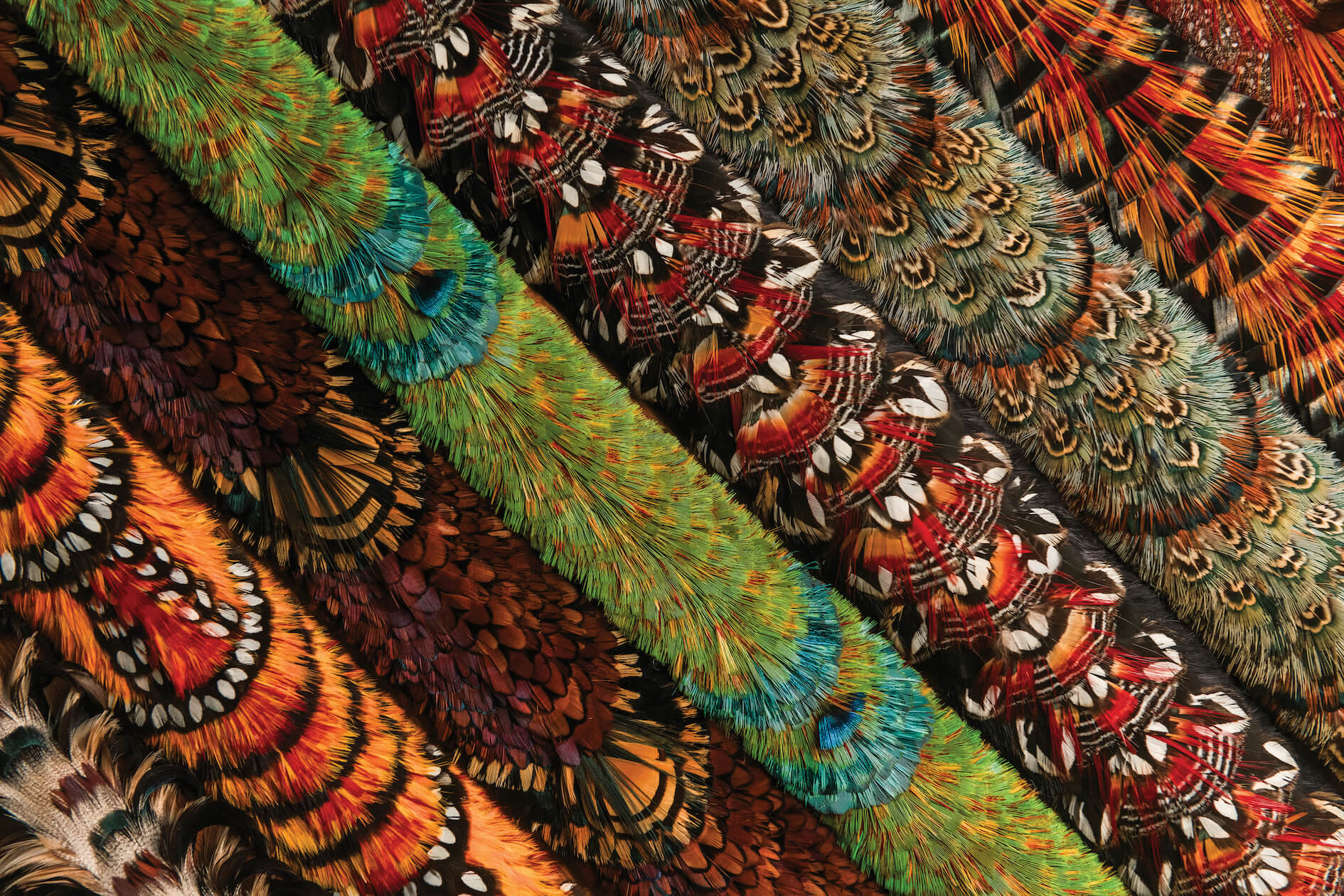
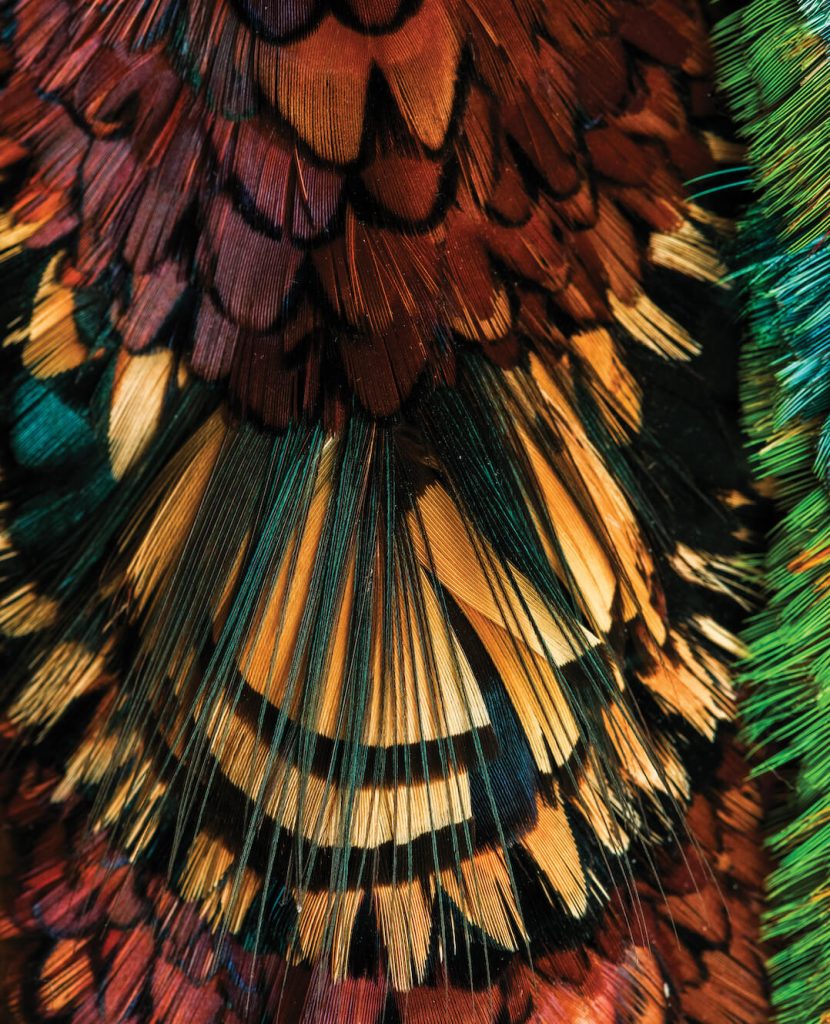
Obtaining feathers is one part of the craft that has drastically changed. Centuries ago, warriors collected the delicate plumes for special way up in the forested mountains, gently plucking just a handful of feathers from the most beautiful birds so as not to harm them. Today, many of those sacred animals have gone extinct, and conservation of Hawai‘i’s endemic species remains a vital concern. Thus, Beytebiere and her contemporaries rely on ethically sourced game birds purchased from licensed hunters. Bright yellows and reds come from the Chinese pheasant, the same bird that supplied thousands of feathers for King Kamehameha I’s impressive ; iridescent greens and blues come from peacocks; and inky blacks come from the black francolin.

It can take months—even years—to complete the delicate work of crafting lei hulu and other feather adornments.
Beytebiere now shares her own lei hulu at the Eva Parker Woods Cottage, a historic shoreside structure at Mauna Lani, Auberge Collection, where the Artisans of Old Hawai‘i’s Arts and Crafts experience brings local makers together to share their crafts with guests. For Beytebiere, it is the ‘ohana that bonds over these heritage crafts that ultimately breathes new life into Hawai‘i’s old traditions.

