


No place expresses itself through food quite like Italy. Here, every dish and ingredient is rife with meaning: The reigning pasta shapes of any given region are points of serious pride (Emilia-Romagna’s tortellini, Puglia’s orecchiette), and sauce is defined—one might even say prescribed—by the local ingredients (one need only look to Rome’s revered cacio e pepe for evidence). In Tuscany especially, recipes are inherited like heirlooms—and what’s on a plate is never considered just sustenance; it’s practically sacred, another form of storytelling.
“Food is culture, tradition, and history,” says executive chef Nicola Zamperetti, who has been adapting his own culinary stories at Collegio alla Querce, Auberge Collection since it opened last year. Each of the dishes he has created for La Gamella, the hotel’s signature dining destination, comes with a delectable plot—rooted in his native country’s culinary past, supplied by the local bounty, and informed by his own sophisticated techniques and flair for flavor pairing.

Before creating La Gamella’s menu, Zamperetti devoted himself to learning the history of Tuscany’s culinary traditions, meeting with local farmers and studying the ingredients that have been native to these fertile lands for centuries. In the kitchen, he adapted his findings with careful experimentation, interpreting classic dishes subtly yet elegantly to create a menu that’s modern yet rustic, simple yet sophisticated.

That philosophy is evident in dishes like panzanella, a traditional bread salad. Zamperetti’s version is simple: San Lorenzo bread, ripe tomatoes, cucumbers, and roasted tomato cream—remarkably aromatic and pleasing. Meanwhile, Mediterranean turbot is dry-aged like beef to enrich the fish’s natural flavor and buttery texture, and served with a lemon-caper sauce and herbs. The archetypal bistecca alla Fiorentina is another classic redux, served charcoal grilled and bone-in, and accompanied with roasted tubers and rosemary truffle sauce.
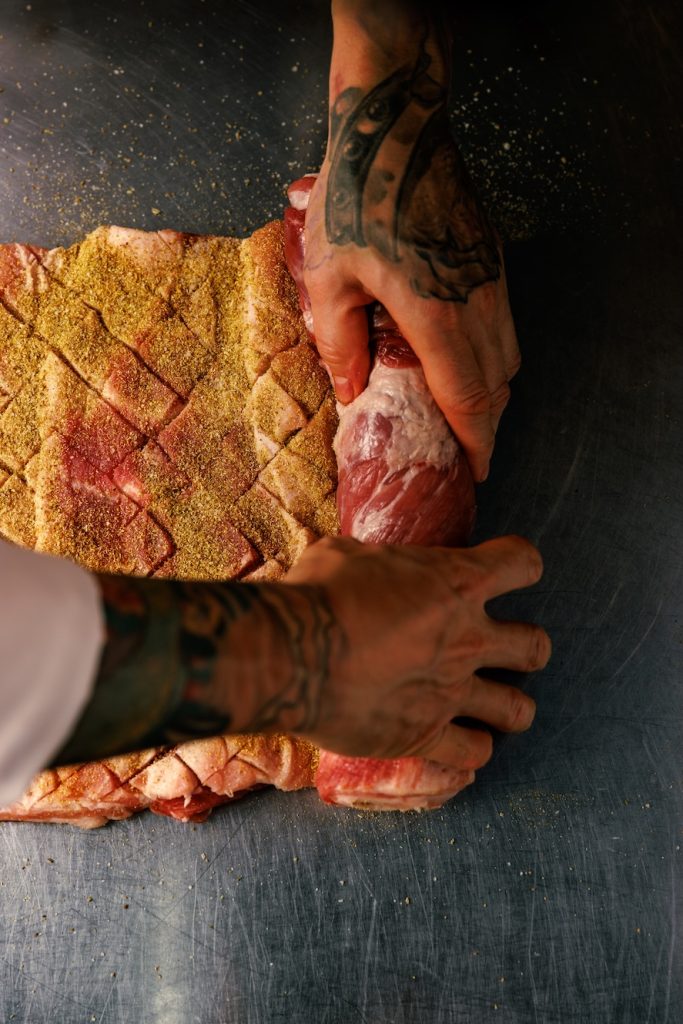
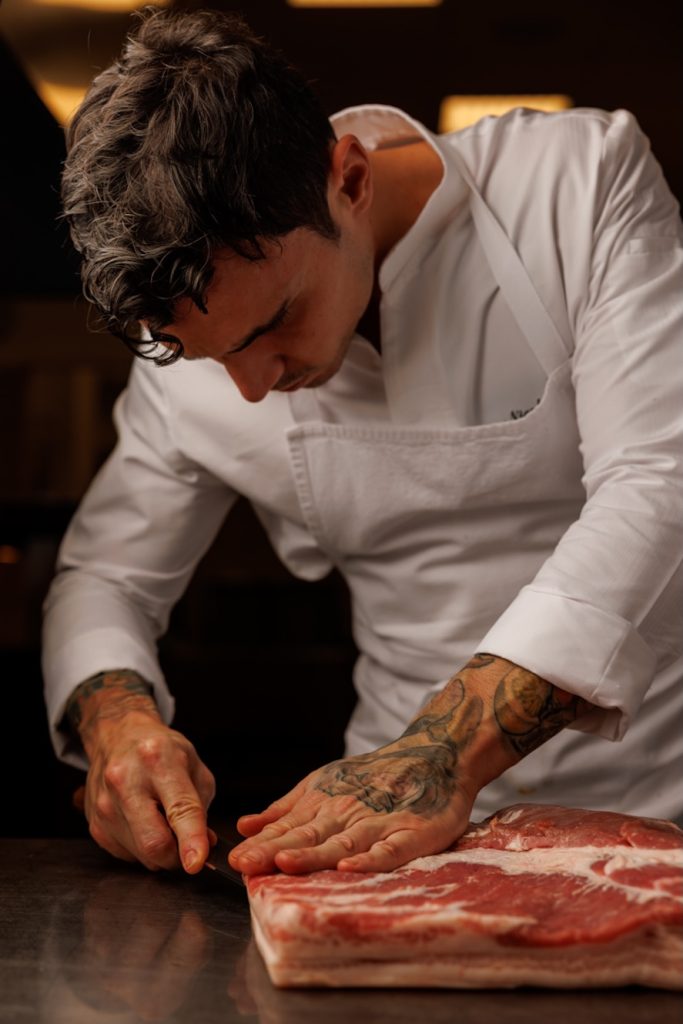
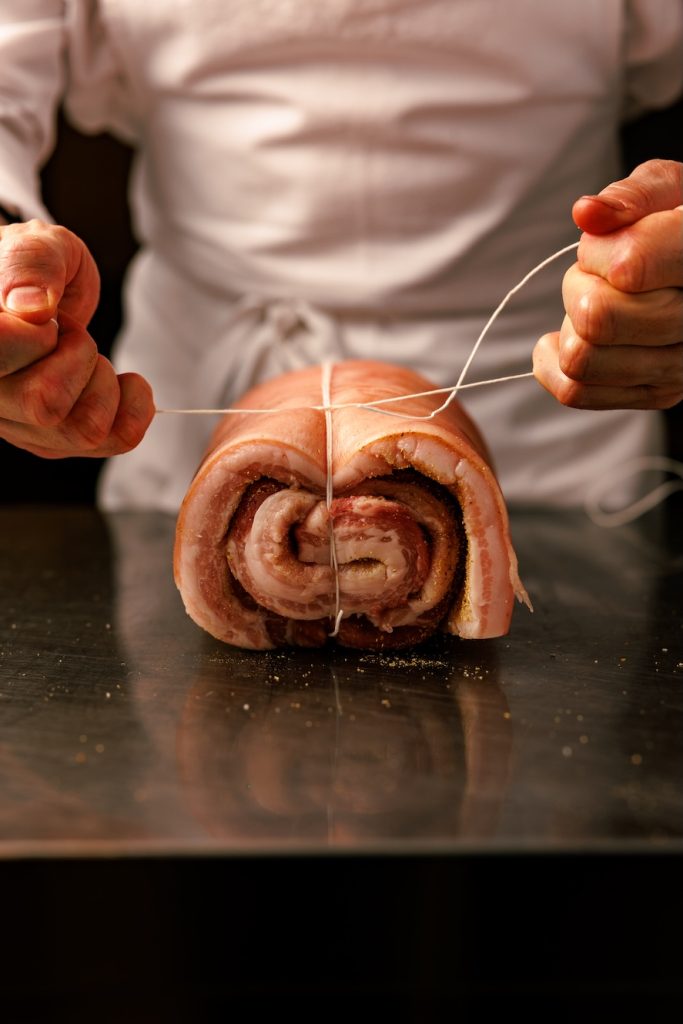
Chef Zamperetti honors the region’s culinary heritage with simply prepared beef dishes, like Tuscany’s Casentino gray pork.

Zamperetti first discovered the luscious flavors of his native Italy’s fruits and vegetables during his time in Sicily. While leading the kitchen of one of the island’s top restaurants, the chef found himself repeatedly preparing a signature dish: whole artichokes dressed with olive oil, salt, parsley, and garlic, roasted on charcoal until the heart is smoky and tender. During his tenure there, he peeled so many artichokes that, when he left his position, he marked the chapter with a large artichoke tattooed across his hand.
At La Gamella, the signature restaurant at Collegio alla Querce, Auberge Collection, executive chef Nicola Zamperetti reimagines classic dishes, like chicken cacciatore, with a modern touch.

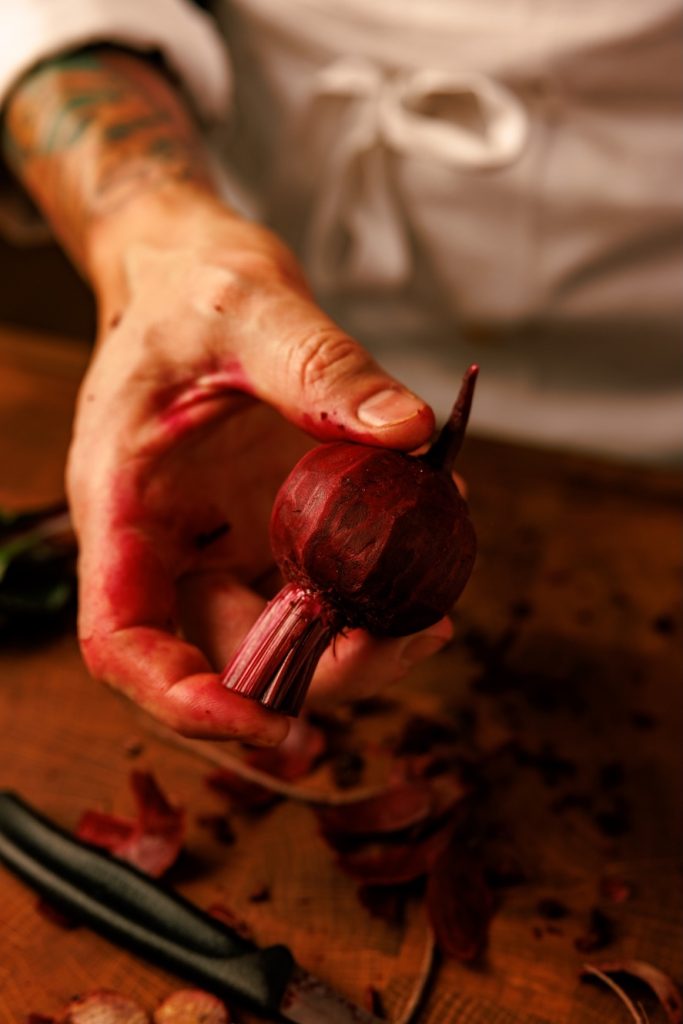
At Collegio alla Querce, vegetables also take center stage. Locally grown beets become a vibrant carpaccio of red, white, and golden yellow slices with vegan almond ricotta and herbs. “When you say carpaccio, the first thing that comes to mind is beef or tuna carpaccio,” he says. “We challenged that expectation with super-fresh vegetables that are just as tasty.” The dish shifts with the seasons: tomatoes in summer, zucchini in fall—always what the farmers offer at their peak.
Spring beet carpaccio from La Gamella, the signature restaurant at Collegio alla Querce, Auberge Collection, in Florence, Italy.
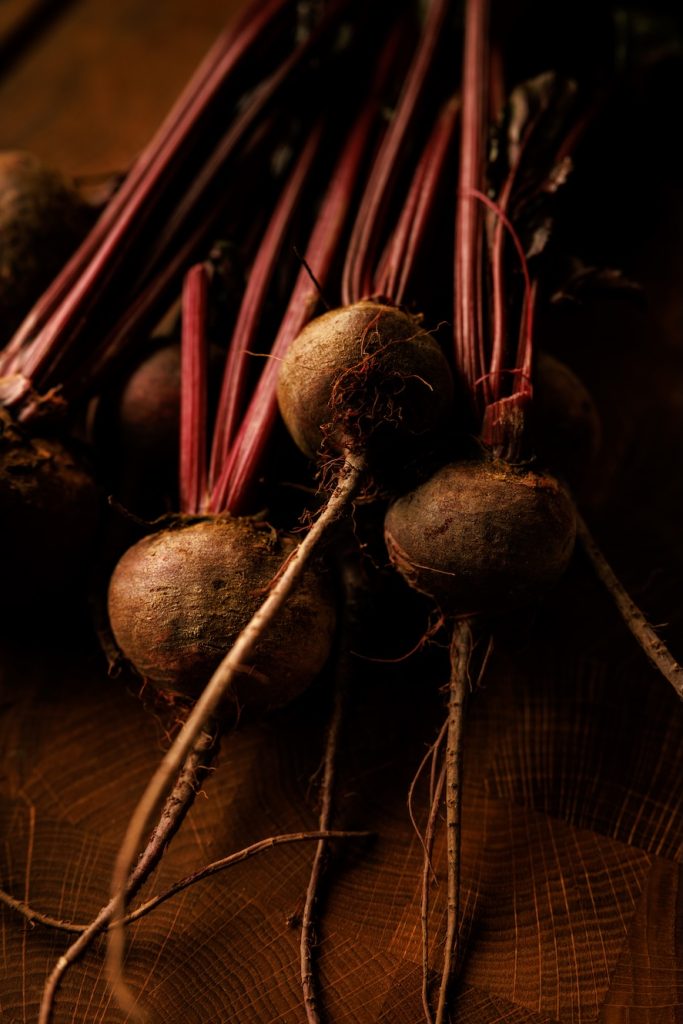
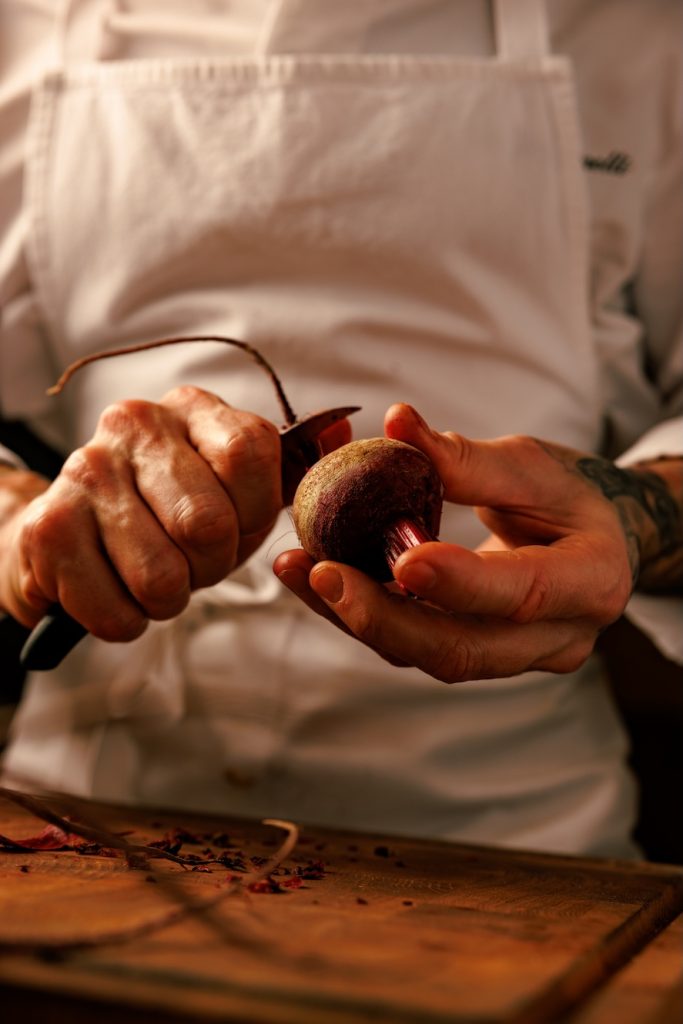
Locally grown produce drives the seasonal menu at La Gamella, as seen in this spring beet carpaccio, in which charcoal-grilled marinated beets are thinly sliced and served with vegan almond ricotta and fresh herbs.

And, of course, there is pasta: Delicate doughy parcels filled with porcini mushrooms, ricotta, black truffles, and Gran Mugello cheese from a nearby dairy capture the forests and farms surrounding the property—and tell the many stories of Tuscany’s cooking. A dramatic reinvention the dish is not, says Zamperetti. Rather, like so many of his beloved dishes, it is an echo of the past, distilling centuries of tradition through a distinctly fresh lens. “It’s familiar dishes that give guests a sense of place, prepared in surprising ways.”
Truffles, a regional favorite, are a constant presence on the menu, including in this pasta stuffed with porcini mushrooms, ricotta, black truffles, and Gran Mugello cheese.

