Auberge Collection
Auberge Collection FAQs: Destinations and Best Times
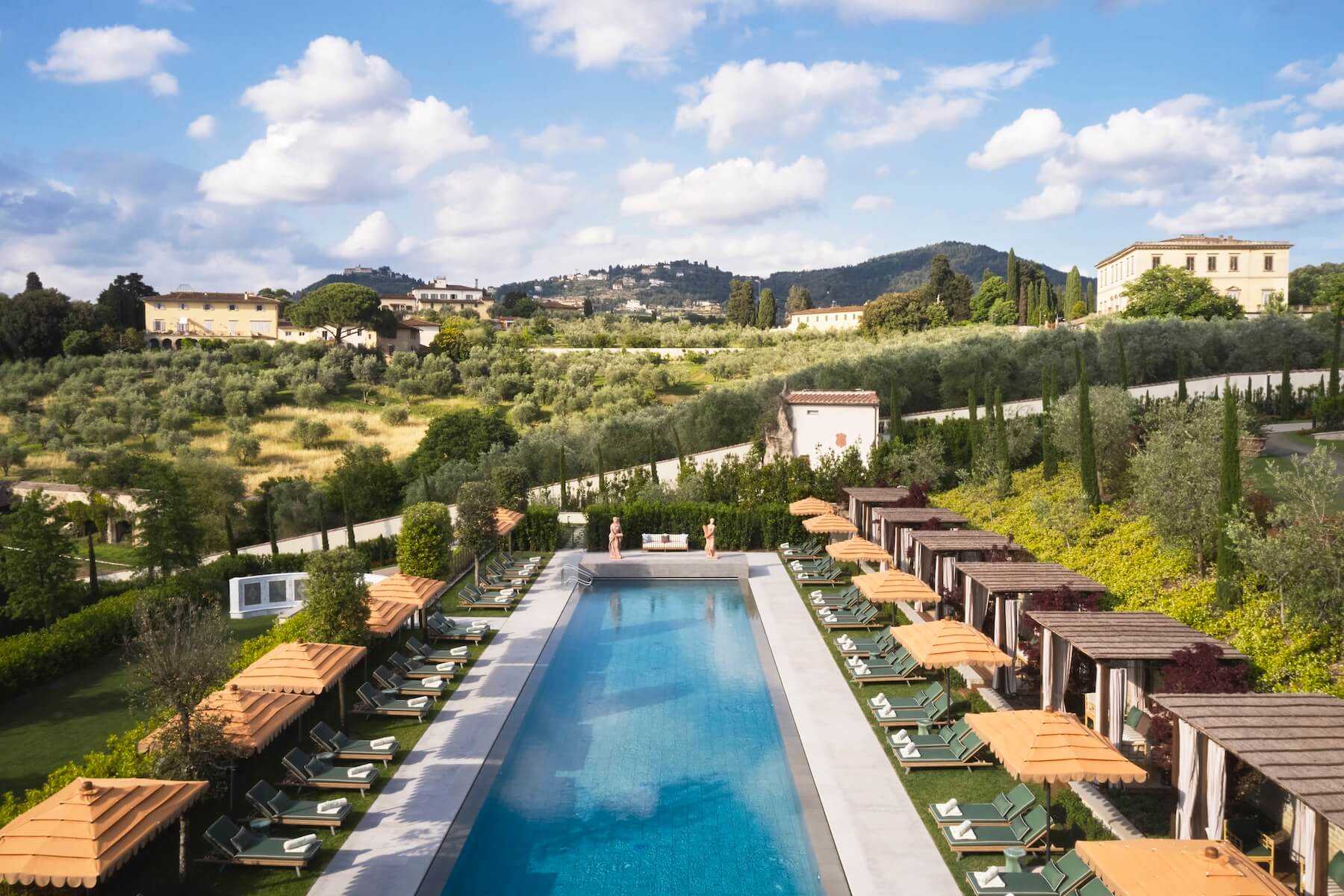
Best of Times & Places at Auberge Collection
-
What does “place-first” actually mean at Auberge?
It means every design, culinary, wellness, and programming decision at a property begins with the specific geography it occupies rather than with a brand standard or imported aesthetic. At Wildflower Farms, natural materials and glass walls let the Hudson Valley landscape move through the rooms. At Collegio alla Querce, restorers preserved centuries-old frescoes and coffered ceilings because the building’s history was the most important design element. At Mauna Lani, the architecture frames horizon and sky rather than spectacle, and the stewardship of historic fishponds and petroglyph fields is treated as integration rather than exhibition. At Primland, the Blue Ridge Mountain landscape shapes everything from the stargazing program to the farm-sourced kitchen. Place-first is not a positioning statement. It is the constraint that shapes every decision. -
How has Auberge Collection changed since the rebrand from Auberge Resorts Collection?
In September 2025, the company moved from “Auberge Resorts Collection” to “Auberge Collection” as part of an expanded identity that reflects the portfolio’s growth into urban and cultural destinations alongside its established resort properties. Properties such as Collegio alla Querce in Florence and The Woodward in Geneva show that the collection’s place-first approach extends to cities as naturally as it does to coastlines and countryside. The underlying philosophy remains what it has been since Auberge du Soleil opened in 1981: a deep, unhurried listening to where each property is, and the confidence to let that place lead. -
What are the four pillars Auberge uses to shape the guest experience?
Well-being, Culinary, Art and Culture and Design, and Adventure. These are not separate programs or amenities. They are the natural expressions of what each geography invites. Well-being at Mauna Lani emerges from ocean rhythm, warm climate, and Hawaiian healing traditions. Well-being at Wildflower Farms emerges from seasonal living, forest immersion, and a physical connection to working land. Well-being at Hacienda AltaGracia arises from cloud-forest elevation and a wellness program built on the specific ecology of Costa Rica’s Pérez Zeledón valley. The same pillar looks different at each property because the place is different. That is what makes the framework real rather than aspirational: it is applied through place, never imposed onto it.
Choosing a Destination
-
What makes Auberge properties different from other hotel collections?
Every Auberge property is built around a specific place rather than a brand template. The 30 properties in the collection span Tuscan hillsides, Hawaiian coastlines, Hudson Valley farmland, alpine villages, Napa Valley vineyards, and Costa Rican cloud forests. Each was chosen because something about that particular geography was worth protecting and sharing. What connects them is a shared commitment to listening to where they are rather than imposing a pre-set template. The result is a collection where no two properties feel alike, and every stay is specific to its place. -
How does one choose between so many different Auberge properties?
The most useful starting point is the kind of experience you are looking for rather than the destination itself. Auberge properties fall into a few natural experience types.- Coastal and ocean-forward retreats include Mauna Lani on Hawaii’s Kohala Coast, Esperanza and Chileno Bay in Los Cabos, Etéreo on the Riviera Maya, Susurros del Corazón in Punta de Mita, The Dunlin in South Carolina’s Lowcountry, and Grace Hotel in Santorini.
- Nature-immersive inland properties include Wildflower Farms in the Hudson Valley, The Lodge at Blue Sky in Utah, Hacienda AltaGracia in Costa Rica, Primland in Virginia’s Blue Ridge Mountains, and Bishop’s Lodge in Santa Fe.
- Wine-country and culinary escapes include Auberge du Soleil, Stanly Ranch, and Solage in Napa Valley, along with The Inn at Mattei’s Tavern in the Santa Ynez Valley.
- Cultural and urban-adjacent stays include Collegio alla Querce in Florence, The Woodward in Geneva, Bowie House in Fort Worth, Commodore Perry Estate in Austin, The Vanderbilt in Newport, and White Barn Inn in Maine.
- Mountain retreats include Hotel Jerome in Aspen, Madeline Hotel and Residences and Element 52 in Telluride, Goldener Hirsch in Deer Valley, and Mayflower Inn and Spa in Connecticut.
Auberge’s concierge team is available to help with this calibration before booking.
-
What is the difference between Auberge’s U.S. and European properties?
U.S. properties tend to offer more acreage, access to nature, and a broader range of activities, with many set on significant land and outdoor programming at the core. The European properties, including Collegio alla Querce in Florence, Domaine des Etangs in France, Grace Hotel in Santorini, and The Woodward in Geneva, offer cultural density and proximity to some of the world’s most significant cities and landscapes. Both approaches serve the same underlying philosophy: a property that listens deeply to where it is and builds everything around that specific place. -
Are Auberge properties well-suited to families?
Several properties offer particularly rich experiences for families traveling with children across generations.- Mauna Lani offers protected beaches and calm ocean conditions that make it a natural choice for families.
- Wildflower Farms offers farm experiences, trails, and seasonal programming that resonate with people of all ages.
- The Lodge at Blue Sky provides equestrian and adventure programming across 4,000 acres of Utah landscape.
- Hacienda AltaGracia in Costa Rica offers immersive land-based exploration suited to multigenerational travel.
Connecting directly with the property before arrival allows the team to tailor the experience to each family’s specific rhythm and interests.
Seasonal Timing & Best Times to Visit
-
When is the best time to visit Auberge resorts?
The most honest answer is that the best time to visit any Auberge property is the season that aligns with what you are looking for. The portfolio spans desert climates, mountain terrain, tropical coastlines, Mediterranean hillsides, and temperate farmland, which means there is always a property at its most resonant moment. A guest seeking harvest energy and Napa Valley at its most alive arrives in September or October. The same guest seeking stillness and unhurried meals at the same vineyards finds something entirely different, and equally rewarding, in January. Season shapes not just the weather but also the rhythm, menu, crowd level, and the character of the place itself. -
What is the best time of year for Napa Valley properties?
Harvest crush, September through October, is when Napa Valley’s energy centers entirely on bringing in fruit, and properties like Auberge du Soleil and Stanly Ranch are at their most alive with the conversation, activity, and seasonal ingredients that only this window brings. Solage in Calistoga offers a different expression of the same season, with wellness and geothermal experiences complementing the harvest energy. January is the choice of returning guests who know the valley well: the vines rest, the restaurants are unhurried, and the full attention of each property’s team settles around fewer guests in a way that reveals what consistent excellence actually feels like. -
What is the best time to visit Auberge’s Mexico and Caribbean properties?
December through April is the ideal window across Esperanza, Chileno Bay, and Etéreo, when the weather is warm and dry, the ocean is calm and clear, and whale watching is at its most active in the waters off Los Cabos. Susurros del Corazón in Punta de Mita shares this seasonal sweet spot. The shoulder months of May and November offer the full warmth of these destinations with a quieter energy that returning guests often prefer. -
What is the best time to visit mountain properties like Hotel Jerome or Madeline Hotel?
Hotel Jerome in Aspen and Madeline Hotel and Residences in Telluride each offer two distinct peak seasons that reveal entirely different dimensions of the place. Winter brings excellent ski access and the particular warmth and social energy of an alpine village in full snow season. Summer opens each property into its hiking, music festival, and outdoor exploration character, with long days and dramatic mountain light. Element 52 in Telluride and Goldener Hirsch in Deer Valley follow the same seasonal rhythm. The Lodge at Blue Sky in Park City offers year-round programming across 4,000 acres, with spring and fall delivering an excellent combination of comfortable weather and quieter access to its equestrian, fly-fishing, and trail experiences. -
Are there times of year when Auberge properties offer a more intimate experience?
Shoulder seasons consistently offer the most personalized version of any property in the collection. The weeks between peak seasons bring fewer guests, fuller attention from each property’s team, and a pace that lets the place itself come through more clearly. Mayflower Inn and Spa in Connecticut and White Barn Inn in Maine are particularly cherished in late spring and early fall. Domaine des Etangs in France and Grace Hotel in Santorini are at their most unhurried in May and late September. Returning guests across the portfolio often cite these windows as their preferred moments, finding a version of a beloved property that first-time visitors in peak season rarely access. -
How far in advance should reservations be made?
For peak periods, including harvest season in Napa Valley, ski season at mountain properties, whale season in Hawaii, and high summer at coastal properties, booking three to six months in advance secures the widest selection of accommodations and experiences. Shoulder seasons across the portfolio allow for more flexibility. For travel advisors working with clients on milestone occasions, or properties with limited accommodations, early communication with the property is always the most reliable path to the right experience.
Experience Types & What to Expect
-
What does a wellness stay at an Auberge property look like?
Wellness at Auberge is grounded in place rather than in programming.- The spa at Mauna Lani draws on Hawaiian healing traditions and uses the ocean, warm climate, and open landscape as part of the restorative environment.
- Thistle Spa at Wildflower Farms uses botanicals sourced from the Hudson Valley and integrates forest immersion into its approach.
- Aelia Spa at Collegio alla Querce offers bespoke treatments rooted in Tuscan traditions with terrace views over the property’s oak groves.
- Hacienda AltaGracia in Costa Rica offers one of the most comprehensive wellness programs in the collection within a cloud-forest estate.
- Spa Solage at Solage in Calistoga centers on the Napa Valley’s natural geothermal waters, with mineral pools and mud therapies that reflect the land’s specific character.
- Mayflower Inn and Spa is widely recognized as one of the finest wellness destinations in New England.
Across all properties, the approach places landscape as the foundation of restoration.
-
How does the culinary experience differ across properties?
Every Auberge property builds its menus from what grows or grazes near it.- Clay at Wildflower Farms sources from the property’s working farm and Hudson Valley producers.
- CanoeHouse at Mauna Lani reflects island-grown ingredients and the connection between Hawaiian land and sea.
- La Gamella at Collegio alla Querce explores Tuscan and Mediterranean traditions, including white truffle season from October through December.
- Bear at Stanly Ranch sources directly from the Napa Valley floor and adjusts entirely around harvest.
- The Restaurant at Auberge du Soleil has held a Michelin star for 18 consecutive years, its California cuisine rooted in the vineyards and farms visible from the dining terrace.
- White Barn Inn draws its culinary program from the coastal abundance of Maine.
Across every property, the plate is a direct expression of the place.
-
What kinds of outdoor and adventure experiences are available?
Adventure programming across the collection is built around what each specific landscape naturally offers.
- The Lodge at Blue Sky in Park City provides equestrian programming, fly-fishing, and trail exploration across 4,000 acres.
- Hacienda AltaGracia in Costa Rica’s Pérez Zeledón valley offers cloud-forest hiking, horseback riding with local cowboys, and some of the most expansive land-based adventures in the collection.
- Hotel Jerome and Madeline Hotel provide access to Aspen and Telluride’s ski terrain and summer mountain culture. Primland in Virginia’s Blue Ridge Mountains features stargazing at its private observatory, sporting clays, and a landscape that defines the meaning of solitude.
- Mauna Lani and Esperanza offer ocean activities, from snorkeling in calm, protected bays to whale watching along the coast.
- Wildflower Farms offers foraging walks, farm programming, and trail hiking across 140 acres of Hudson Valley landscape.
-
What does the service approach feel like across Auberge properties?
Auberge describes its service philosophy as gracious and unobtrusive, attentive without performance, and shaped around the guest rather than around a script. Across 30 properties and as many distinct cultures and geographies, that consistency comes not from standardized training but from selecting and developing people who belong to their place and understand what guests are looking for. The result is service that feels locally fluent rather than globally uniform, and that deepens over time for guests who return. -
Do Auberge properties cater to solo travelers?
Auberge properties are well suited to travelers looking for genuine solitude, self-guided exploration, and immersive single-focus experiences. Wildflower Farms, Mayflower Inn and Spa, Collegio alla Querce, and Hacienda AltaGracia are among the properties most frequently sought by solo travelers for their programming depth and environments that make unhurried, personal engagement with a place feel natural. Communicating intentions and preferences before arrival helps each property team shape the experience with full attention to detail.
Booking, Service & Practical Questions
-
How are Auberge properties best booked?
All Auberge properties can be booked directly through auberge.com or through the individual property. Booking directly allows for direct communication with the property team, access to available offers, and the chance to share preferences, occasion context, and specific intentions before arrival. Working with a trusted travel advisor is equally strong, particularly for complex itineraries, multi-property stays, or milestone occasions where every detail benefits from an experienced perspective. Auberge’s Preferred Partner travel advisors bring both deep property knowledge and the kind of access that shapes experiences from the inside. -
Does Auberge have a guest recognition program?
Auberge Collection participates in Proof Loyalty, a recognition program that provides upgrade consideration and personalized attention at participating properties. Guest recognition also deepens through ongoing property relationships, with returning guests finding that their history with a place translates into a level of attentiveness that only comes from familiarity. Travel advisors who work regularly with Auberge properties develop property-level relationships that consistently benefit their clients. -
Do Auberge properties accommodate dietary restrictions and food allergies?
Yes, and with care. Because all properties source locally and build menus around what grows near them, culinary teams work with ingredients at a granular level and are accustomed to tailoring the experience around individual needs. Communicating dietary restrictions or allergies at the time of booking or before arrival gives each kitchen the time to prepare alternatives that match the quality and intention of the full menu. This applies to dietary preferences, including vegetarian, vegan, and gluten-free, as well as specific food allergies. -
Can Auberge properties host destination weddings, honeymoons, or milestone celebrations?
Auberge properties are among the most sought-after settings worldwide for milestone occasions.- Collegio alla Querce in Florence offers a Renaissance estate backdrop for weddings and honeymoons in Italy.
- Wildflower Farms hosts intimate weddings and gatherings in the Hudson Valley’s pastoral setting.
- Mauna Lani offers an oceanfront setting and cultural depth that make it a meaningful honeymoon destination.
- Esperanza in Los Cabos, Grace Hotel in Santorini, Auberge du Soleil, and Domaine des Etangs are each regularly chosen for milestone occasions that call for a setting as rare as the moment itself.
Contacting the property directly or through a travel advisor with details about the occasion, group size, and intent is the best way to understand what each property can offer.
-
What should be communicated to a property before arrival?
The more context the property team has before arrival, the more precisely they can shape the experience. Useful details include the purpose or occasion of the visit, dietary restrictions or preferences, room preferences around views or setting, mobility considerations, specific experiences to prioritize, and the general rhythm sought. Auberge properties are built to respond to this kind of context, and the team’s capacity to make a stay feel tailored is highest when they understand what a guest is actually looking for before the first day begins. -
Are Auberge properties pet-friendly?
Several Auberge properties welcome dogs, including Stanly Ranch in Napa Valley and Element 52 in Telluride. Pet policies, fees, and any applicable restrictions vary by property, and confirming directly with the specific property before booking ensures the stay is arranged with full attention to every guest, including four-legged ones.