

It was early morning in Tanzania’s Mwiba Wildlife Reserve, and the savanna was still. The empty green plains stretched for miles until they disappeared into the distant mountains, cutting a clean, sharp line across the powder-blue sky. All signs of life were quiet, just rousing from a night of slumber: the odd cluster of wildebeest, chewing the grass and whipping their tails; elephants lumbering in slow unison.
But the most impactful presence on this crisp morning was the utter lack of one presence in particular: no other humans—not even human sounds—as far as the eye could see or ear could detect. The ensuing stillness felt less like absence and more like space—something increasingly rare and immediately felt.

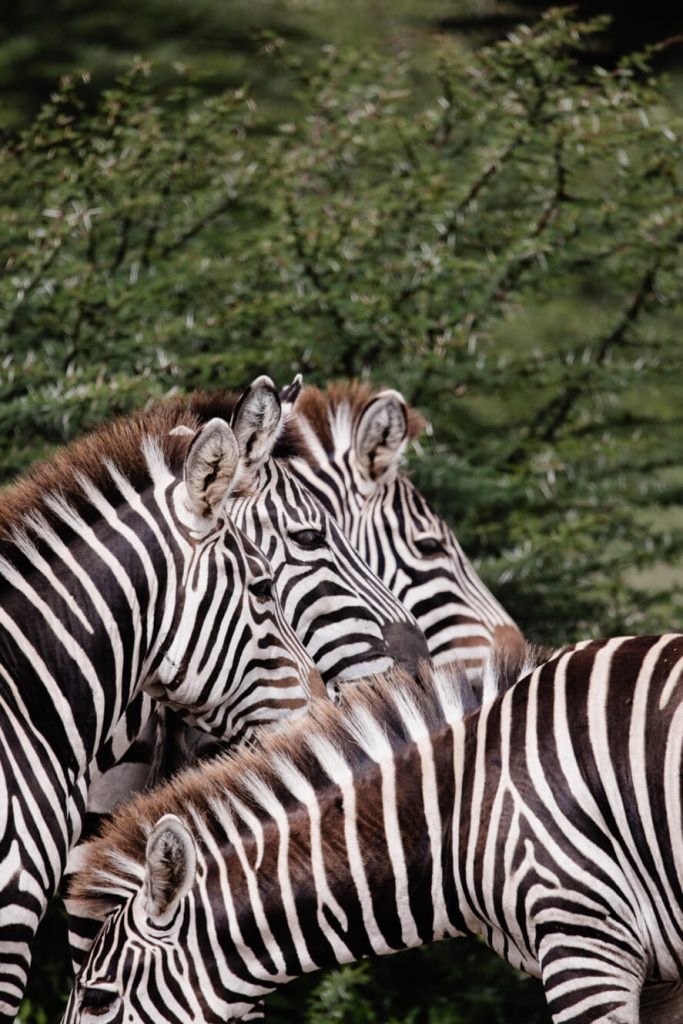
At Mwiba Wildlife Reserve, a protected wildlife area south of Serengeti National Park, such thrilling and secluded animal sightings are so common as to be almost ordinary—even the Great Migration, the legendary phenomenon that sees 2 million wildebeest and hundreds of thousands of zebras and antelopes cross the Serengeti, can often be glimpsed without another human in sight. One of the largest conservation initiatives in Tanzania, this swath of land has been under the stewardship of the Friedkin Conservation Fund since 1994. The fund’s core mission—to sustain the land, the ecosystem, and the local community—is shaped by a philosophy of connection.

The Friedkin family’s relationship to Tanzania spans more than four decades, informed both by time spent in the bush and a deep respect for what must remain untouched. Across the greater ecosystem, this commitment extends beyond the environment into surrounding communities, supporting access to education, creating pathways to economic independence, and helping to shape a future where both wildlife and people can thrive in balance.

Over the last five years alone, the Friedkin Conservation Fund has made staggering strides in community initiatives, enrolling 2,700 individuals (80 percent of them women) into an Economic Empowerment Program, providing 2,500 daily school meals, and supporting 57 scholarship students. Conservation has been positively impacted too: The fund safeguards hundreds of square miles of land, forming protected buffer zones around Serengeti National Park and the Ngorongoro Conservation Area. Thousands of acres of invasive plant species have been cleared, and critically endangered black rhinos have been cared for via national darting initiatives. It’s a long-term commitment, and the work, by all accounts, is just getting started.
Those who visit the Mwiba Wildlife Reserve’s Mwiba Lodge, Auberge Collection also enjoy the benefits of these monumental efforts. The hilltop luxury lodge is the beating heart of the protected area, offering intimate sightings within the private Mwiba Wildlife Reserve, as well as wellbeing experiences and cultural visits with local Hadzabe and Datoga communities. And now, it’s part of the new Auberge Safari, a collective of nine luxury lodges and camps across Tanzania, each with its own identity, shaped by legacy, locale, culture, and connection. Uniting two of East Africa’s most respected conservation-led safari operators—Legendary Expeditions and Chem Chem Safari—the collection establishes a new course of extraordinary journeys and meaningful experiences in some of the most sought-after parts of the country.


At Mwiba Lodge, Auberge Collection, that’s most evident when it comes to proximity to wildlife. Guests have their own dedicated vehicle and guide, and are free to travel at their own pace, in their own language, and on their own terms. But they needn’t travel far to experience the riches of the reserve.
As that crisp morning quietly unfolded, the lodge’s truck—still the only one in sight—suddenly stopped short at the sight of two male cheetahs peering inquisitively, and perhaps hungrily, amid the tips of the blades of grass. Our guide inched the vehicle closer, then off the road and into the brush. Two brothers lounging in the sun, he told us, adding it was unlikely they’d hunt due to the heat of the fast-rising sun. Then, a sound. The pair’s ears pricked up, their necks turning as they scanned the plains for signs of life. Nothing. Across the savanna, all was still, yet we patiently waited, watching, as they flicked their tails, rolled over, and occasionally bolted upright.

Eventually, they stood and sauntered into the grass, continuing about their lazy day. Remarkably, more than 20 minutes had passed. Had we shared this sighting with other safari-goers, a prolonged and intimate encounter may have been less likely—and certainly more crowded.
Such close-up moments make for a different kind of safari, where the wild beauty of Tanzania isn’t hotly pursued, but rather profoundly absorbed. Moments unfold gradually, often lingering far longer than expected—simply because nothing interrupts them.
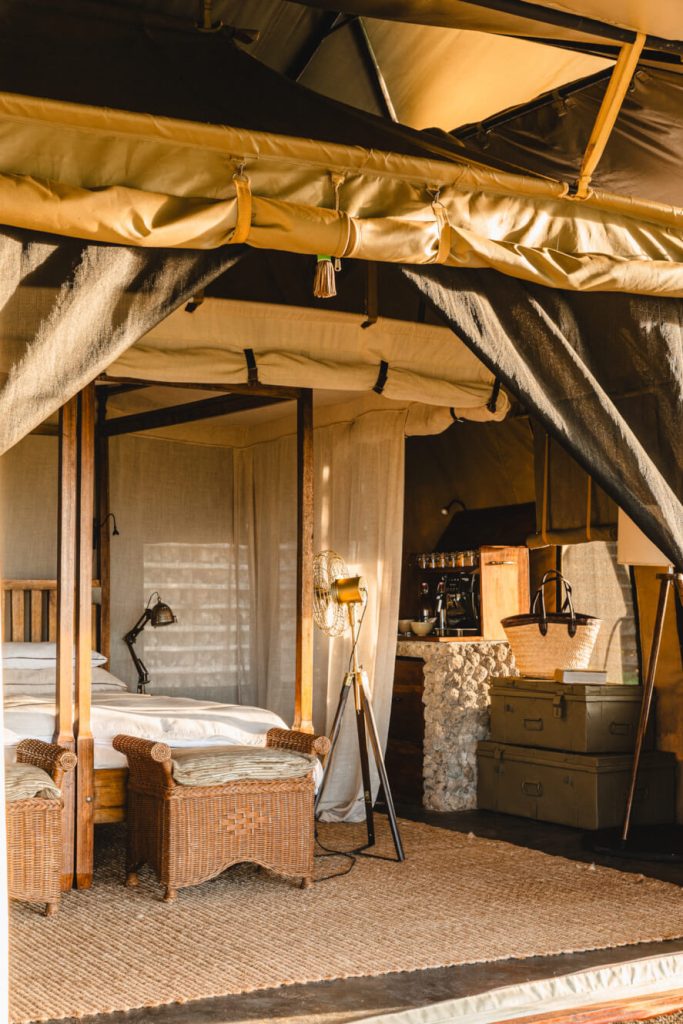
A tented suite at Little Chem Chem, Auberge Collection
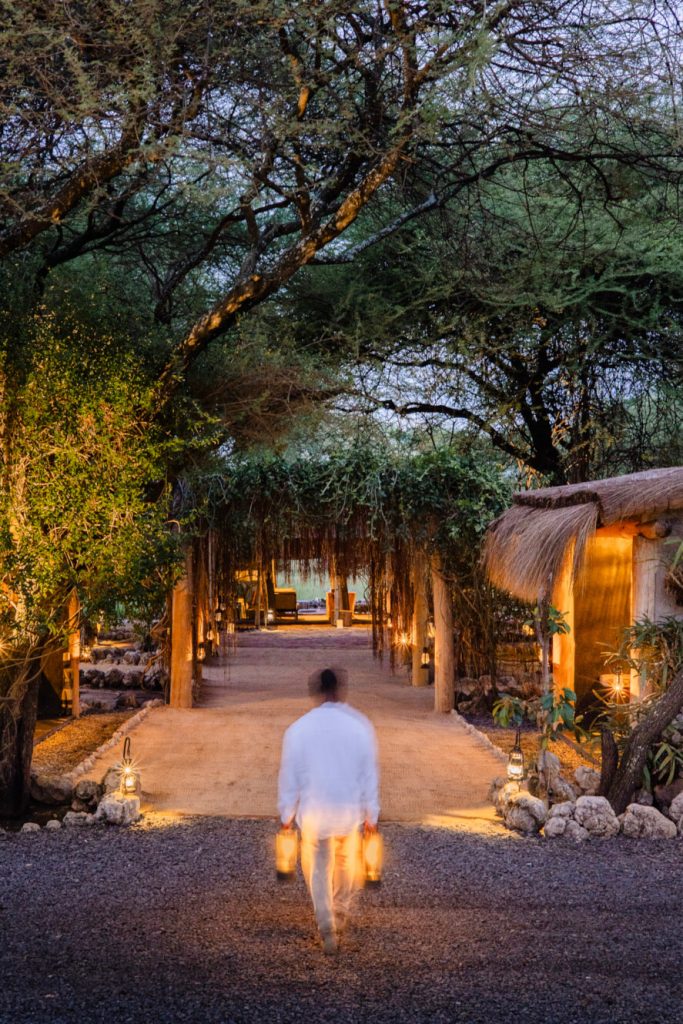
Night falls on Little Chem Chem, Auberge Collection
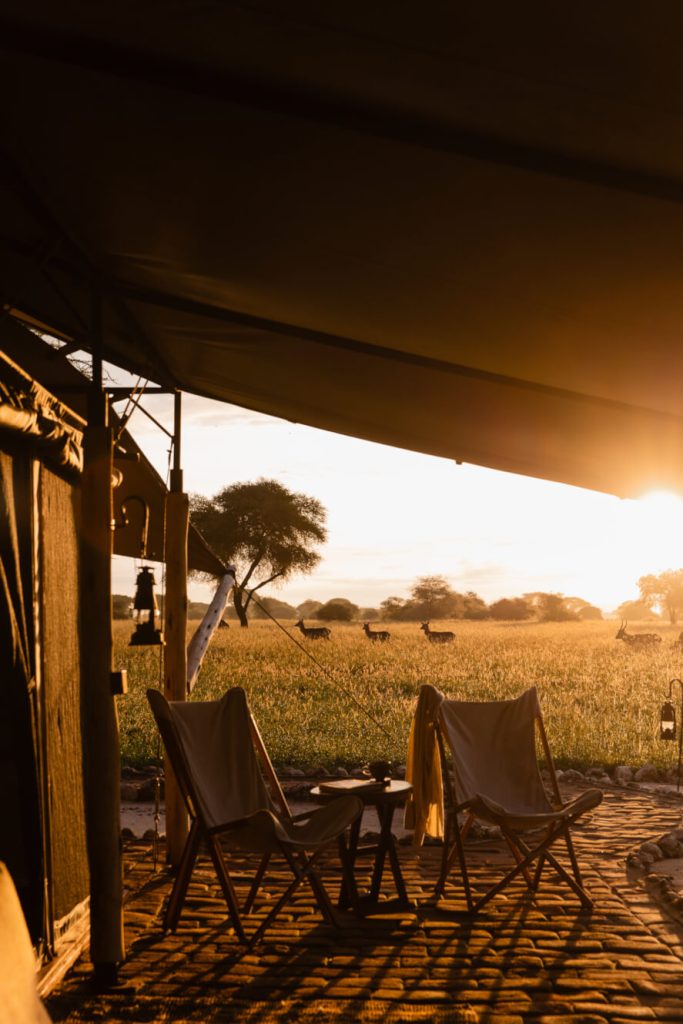
Wildlife sightings often occur right in camp. Here, a herd of waterbuck pass by a tent at Little Chem Chem, Auberge Collection
That meaningful approach is central to each of Auberge Safari’s unique camps: Legendary Lodge near the city of Arusha; Mwiba Lodge in the Mwiba Wildlife Reserve; Mwiba Plains in The Greater Mwiba Protected Wildlife Area. Nyasi and Songa in Northern Serengeti; Mila in the Serengeti’s Western Corridor. And Chem Chem Lodge, Little Chem Chem, and Forest Chem Chem in the Burunge Wildlife Management Area in northern Tanzania. Together, they stretch some 115 miles, connecting—and protecting—the richest wildlife areas throughout Tanzania.
About 100 miles south of Mwiba, near Lake Manyara, Chem Chem’s conservation initiatives have been underway for nearly two decades, focused largely on rewilding one of Tanzania’s most important wildlife migration corridors, between Lake Manyara National Park, Tarangire National Park, and the Serengeti through the Ngorongoro Crater. Until recently, this vital stretch of migratory land was totally degraded, with no animals passing through—that is, until the Chem Chem Association became its official steward, leading an intensive regeneration and repopulating period, and creating three lodges on the land to build new economic opportunities for local communities.

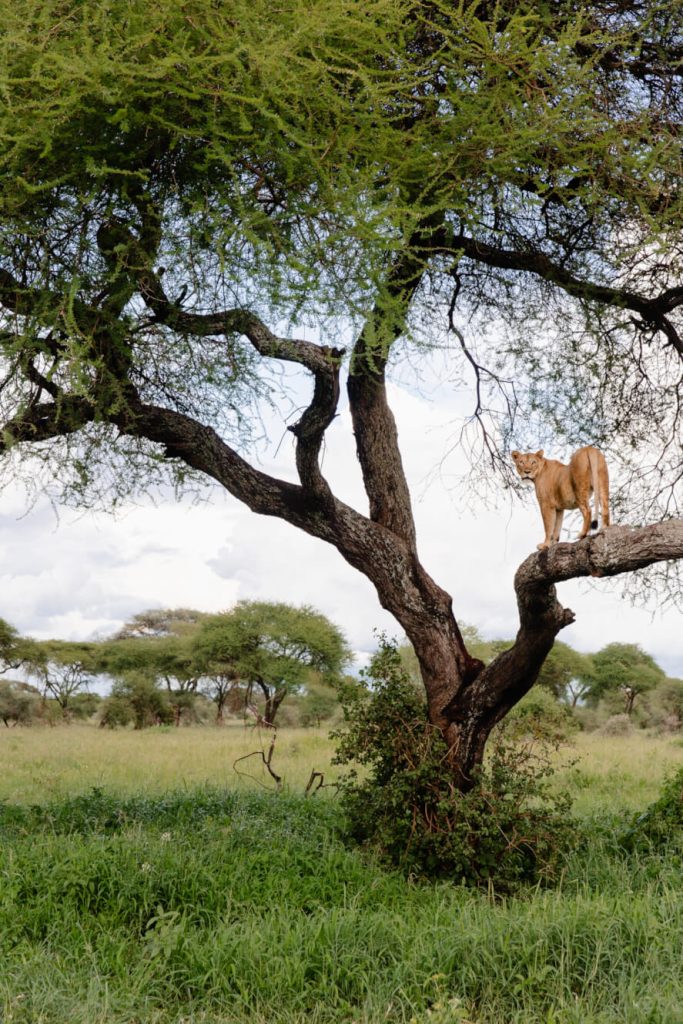
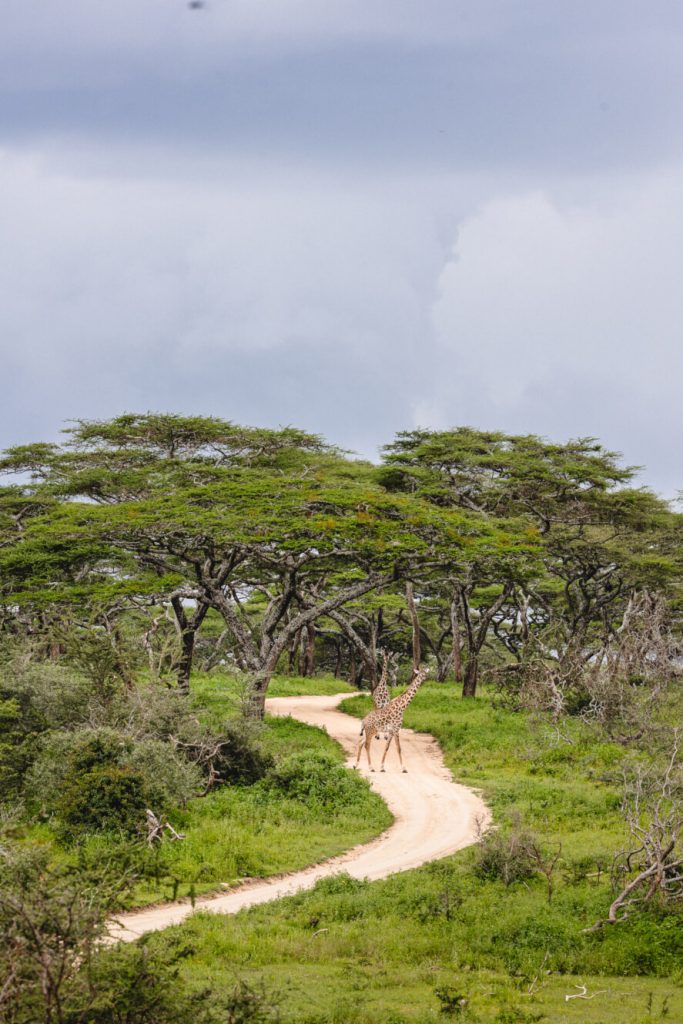
Nearly two decades later, driving through the 50,000-acre Chem Chem exclusive-use protected wildlife area, guests are witness to something once considered unthinkable: elephants crossing the grassy corridor, lions napping atop sycamore fig branches, and giraffes reaching for acacia leaves. What was once almost gone now thrives again as the land regains its rhythm.
With each stay at Auberge Safari, slow and steady is the ethos applied to every part of the experience. Historically, a safari has been prescriptive, bookended by predawn and sunset game drives that create a fast-paced itinerary often antithetical to the freedom of wild nature. But Auberge Safari takes a more rooted, holistic approach: Time is less structured, and unique experiences—such as Chem Chem’s silent walks and ponya cuisine (the latter derived from the Swahili word for “to heal” and including native Tanzanian power foods like moringa and baobab)—emphasize meaningful moments over standardized programming. Similarly, at Mwiba Lodge, you can start the day any time you like, breakfast can be packed and eaten on the go, and guests can come and go as they please.
Of course, the adrenaline of a close-up wildlife experience is always just around the bend—though one can never predict exactly what it might be. One evening at Mwiba Lodge, sundowners were set up on ancient boulders overlooking the plains, and single-seat sofas draped with blankets were arranged around a campfire. The sun still hovered above the horizon, its yellow halo cast over the plains. Then, one by one, as day slipped into night, the stars appeared so brightly it was as though someone had flicked a switch. Almost anywhere else, this would have been the time to race back to camp, with national parks closing and long drives ahead. But here, no one stirred. There was no schedule, no expediency, no watch-tapping—just a moment of stillness, where for a few minutes, it was the stars, the wilderness, and only us.
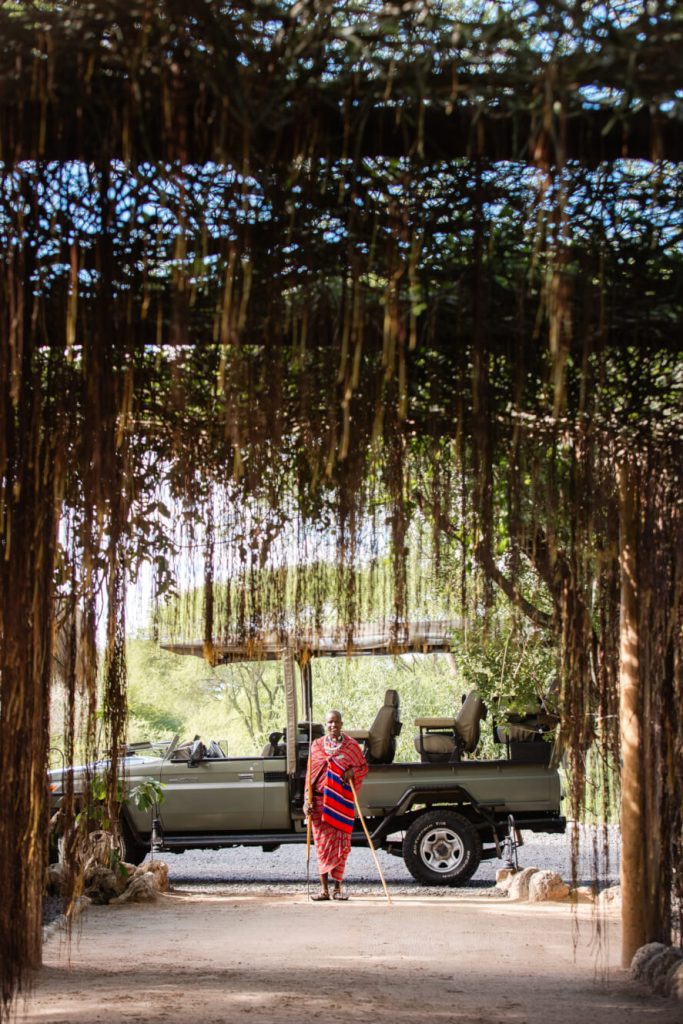
A private safari truck awaits at the entrance of Little Chem Chem, Auberge Collection
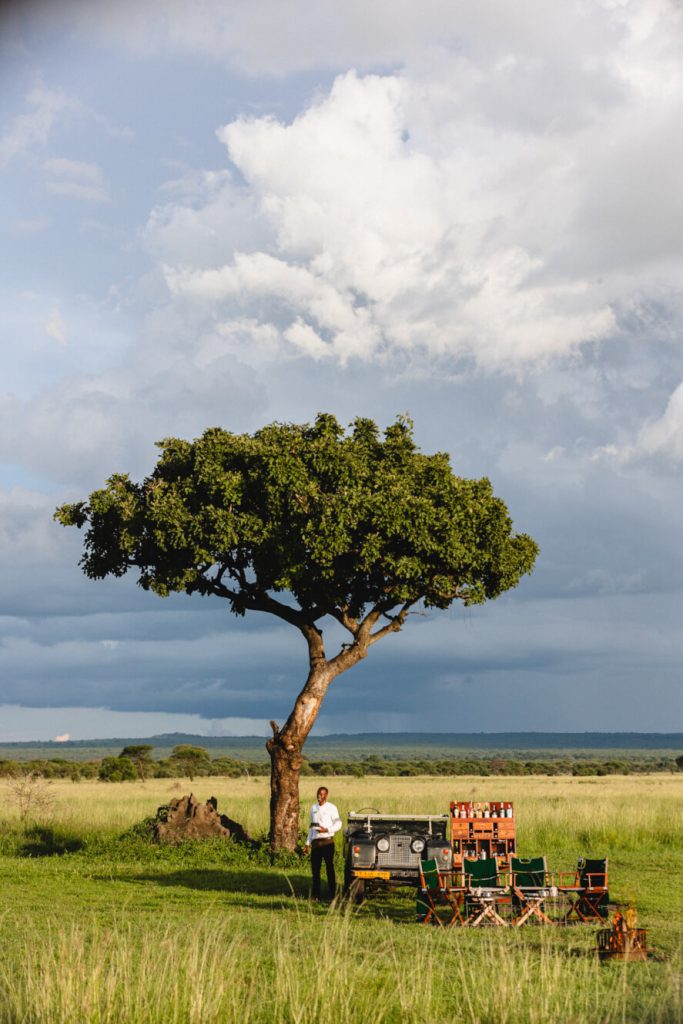
Lunch is served with panoramic views over the Kwakuchinga Wildlife Corridor
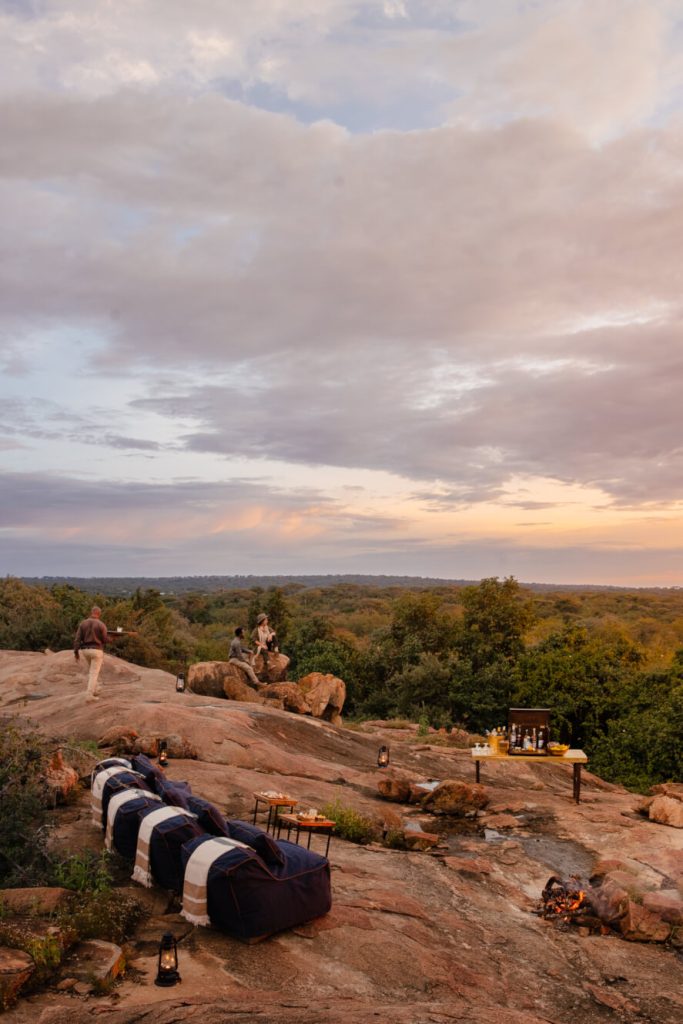
Sundowners in the Mwiba Wildlife Reserve


Days 1–2: Arusha to Mwiba Reserve
The trip begins at Legendary Lodge, Auberge Collection, a quiet, garden-filled estate on a working coffee plantation just outside the Tanzanian capital city of Arusha. It’s a welcome—and restorative—start to an epic adventure.
The next morning, a short flight delivers guests to Mwiba Reserve, an exclusive-use protected wildlife area on the southern edge of the Serengeti. Mwiba Lodge, Auberge Collection, rises from granite boulders, its open-air design oriented toward sweeping views. With virtually no other vehicles in the area, game drives here feel unhurried, and walking safaris offer even closer interactions.

Days 2–5: Culture and Wildlife in Mwiba
Mwiba is as much about culture as wildlife. Time here may include visiting the Hadzabe, one of Africa’s last hunter-gatherer groups, or spending time with the Datoga, known for their metalwork and pastoral traditions.
Back in the bush, the focus remains on the rich diversity of wildlife, tracked with your guide during the day and on night drives after dusk. Between outings, Mwiba Lodge invites downtime: coffee on a private deck, a swim overlooking the savanna, sundowners after a starlit alfresco dinner.

Days 5–7: The Western Serengeti
At Mila, Auberge Collection, in the vast and wildlife-rich plains of the Serengeti’s Western Corridor, the scale expands. The plains here support year-round wildlife, including some of the region’s largest lion prides. A hot-air balloon safari is a highlight for its jaw-dropping bird’s-eye views of the savanna—but there’s endless appeal in staying grounded too: Game drives here may reveal cheetahs hunting, lions lazing, and wildbeest making their long trek in the Great Migration.

Days 7–10: Slow Safari
The final stop, Little Chem Chem, Auberge Collection, sits amid the Burunge Wildlife Management Area, between Tarangire National Park and Lake Manyara National Park, in a private conservation area reserved only for guests. Known for its Slow Safari approach, the property encourages a different tempo and a measured approach: fewer miles covered, more focus on the details.
That ethos plays out in game drives—often centering on tracking the area’s big tusker elephants—as well as visits to nearby Maasai communities, silent walks, rejuvenating wellbeing treatments, and ponya (Swahili for “to heal”) cuisine.
