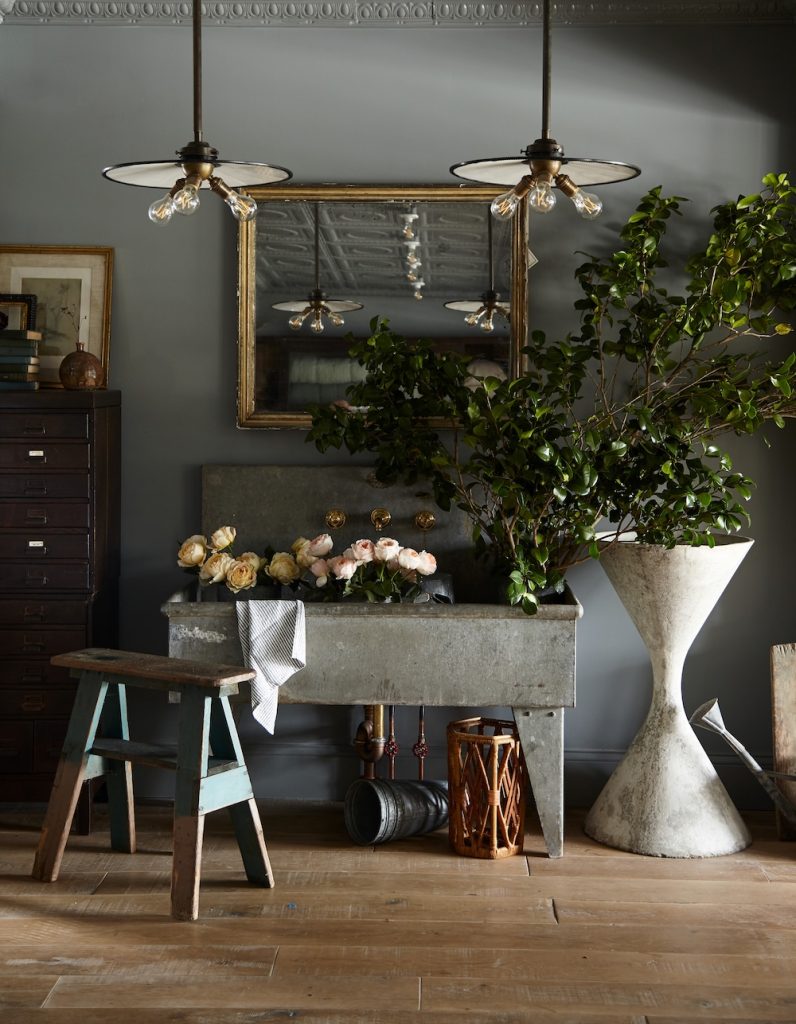
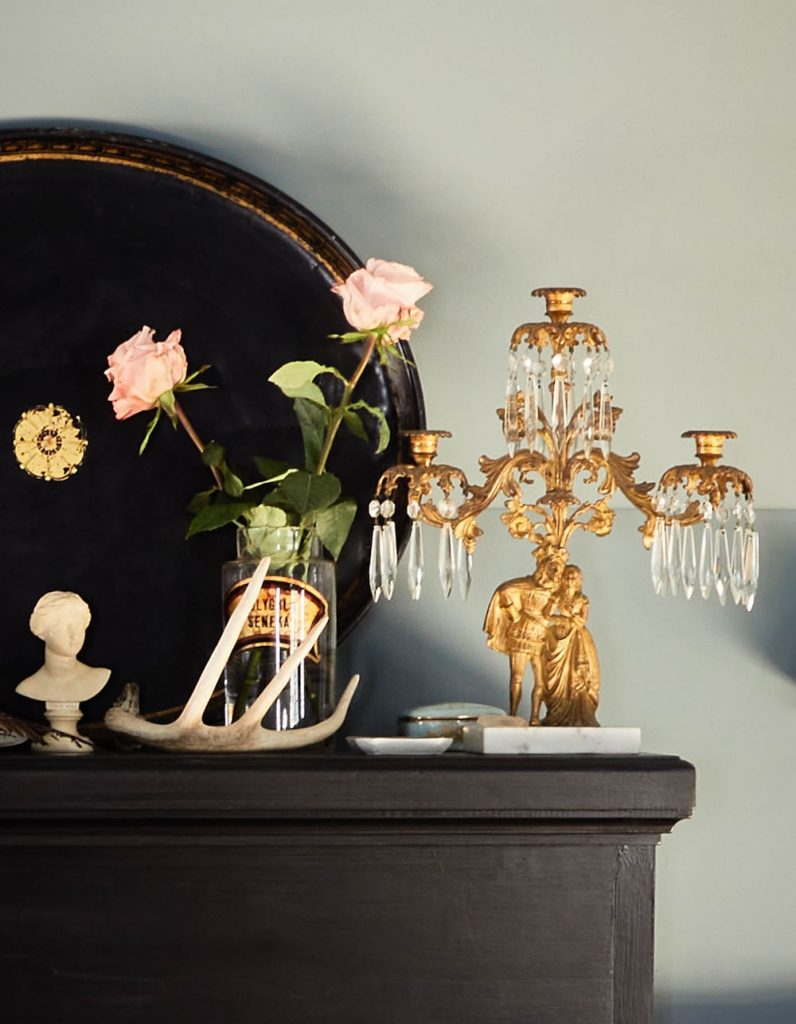
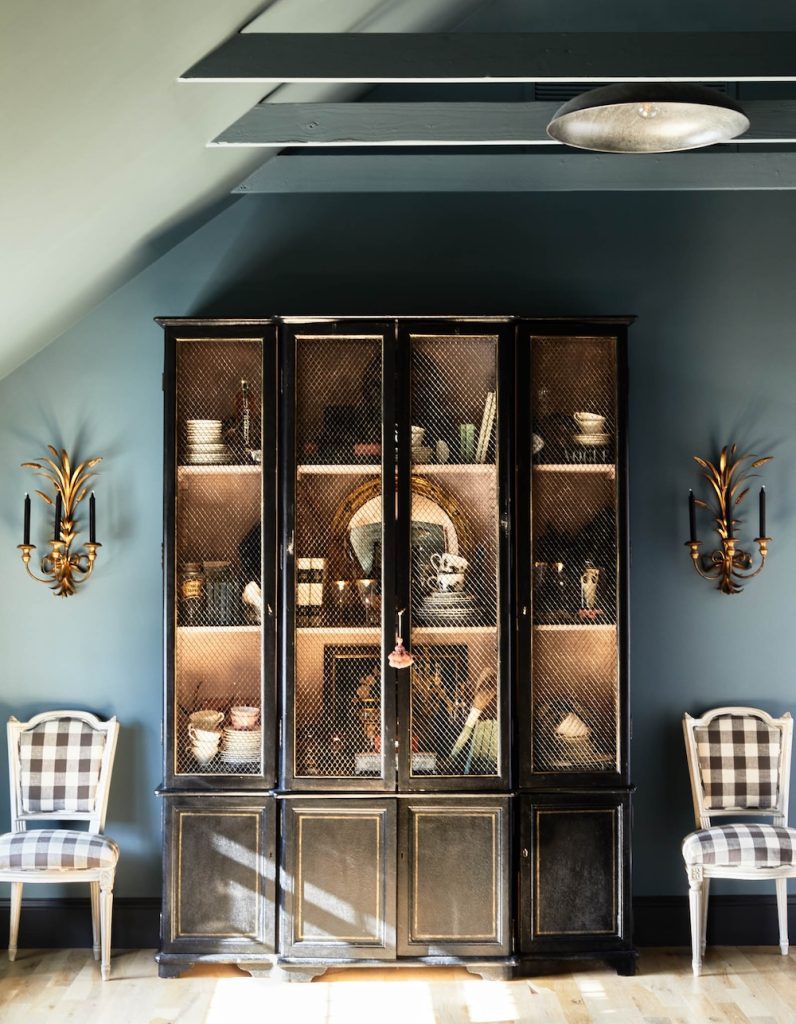
For New York City–based interior designer Jenny Wolf, interiors have always been deeply personal. “Home is a feeling. In my own home, I like things to feel collected,” she says. “I like linking the past to the present—a mix of antiques and eclecticism with contemporary pieces.”
Wolf’s projects, which tend towards a coastal-chic meets English countryside aesthetic outfitted with carefully sourced antiques, are drawn from a deep well of experiences and a life well-lived. Born in New Orleans to parents who were furniture dealers, she was surrounded by a love of design from an early age. “As a small child, I always said that I was going to be an interior designer,” she says.

While she tends to design intuitively, pulling pieces from all parts of the world, Wolf says her stylistic sensibility stems from a love of travel, her upbringing in the South, and a semester abroad at Oxford during her university years. Funny enough, she didn’t realize the influence it had on her until she returned 20 years later. “When I went back, I was like, oh my gosh, this is where I got all this from,” she says. “There was something that I picked up in my travels that I didn’t know was so ingrained in what I was designing. It’s the same with my upbringing: My family has a more traditional Southern aesthetic, which comes from Europe.”

Wolf’s eponymous design studio, which she founded in 2011, has since led her talents to bespoke residential projects such as a Park Avenue penthouse and an expansive family home in Greenwich, Connecticut, that bear the marks of her signature aesthetic: warm, inviting spaces that blend color and pattern seamlessly, overflowing with carefully sourced antiques alongside muted natural textures. It’s old world meets new language—one that’s entirely her own, rooted in a love for the hunt, which can also be found in her interior designs for White Barn Inn, Auberge Collection in Maine.
It’s precisely this hunt that led to the founding of The Huntress, Wolf’s exquisite homewares and antiques store in Pound Ridge, New York. Shopping for antiques is one of Wolf’s great loves — and great talents—and she sources from all over the world, from flea markets in Paris to Southern estate sales. Each piece tells a story of time and place, which Wolf then uses to outfit her many projects.

“As my design business was growing, I was feeling the need to find a space where I could spread my wings,” she says. In her 20 years living in New York, Wolf says, she had never been to Bedford, New York, the tony Westchester enclave that Martha Stewart calls home, but she visited one weekend to scout for potential retail locations at the urging of a friend. She happened to pass by a building with a “for sale” sign on it, and the rest was history. “I couldn’t have found a better home to build the store,” she says.
Her biggest restoration project to date, The Huntress took two years of renovations, eventually birthing her brick-and-mortar lifestyle brand, where she stocks everything from fashion to food and bespoke tea blends. “I was just collecting,” she says, without a real plan, “going to antique shows and traveling to Europe, pulling things that I loved. Part of my design ethos is: Buy things you love and find a way to make them work together.”
Before honing her skills in the design world, Wolf spent her early years in New York working for Ralph Lauren, cutting her teeth as a visual merchandiser for the label’s stores and working on window displays. This early career experience serendipitously led to her current path—albeit no roads are ever truly a straight line. A work trip took Wolf to the iconic West Virginia hotel The Greenbrier, where she was working on an installation. “That visit was a turning point for me,” she says. “I was awestruck by the design and the risk taking. I’d never seen anything like it.”
The classic Americana hotel, founded in 1778 and designed by famed interior designer Dorothy Draper in 1948, inspired Wolf to make the leap into interiors. After returning to New York, she enrolled in Parsons School of Design, got her first client in her final year of study, and was off to the races.

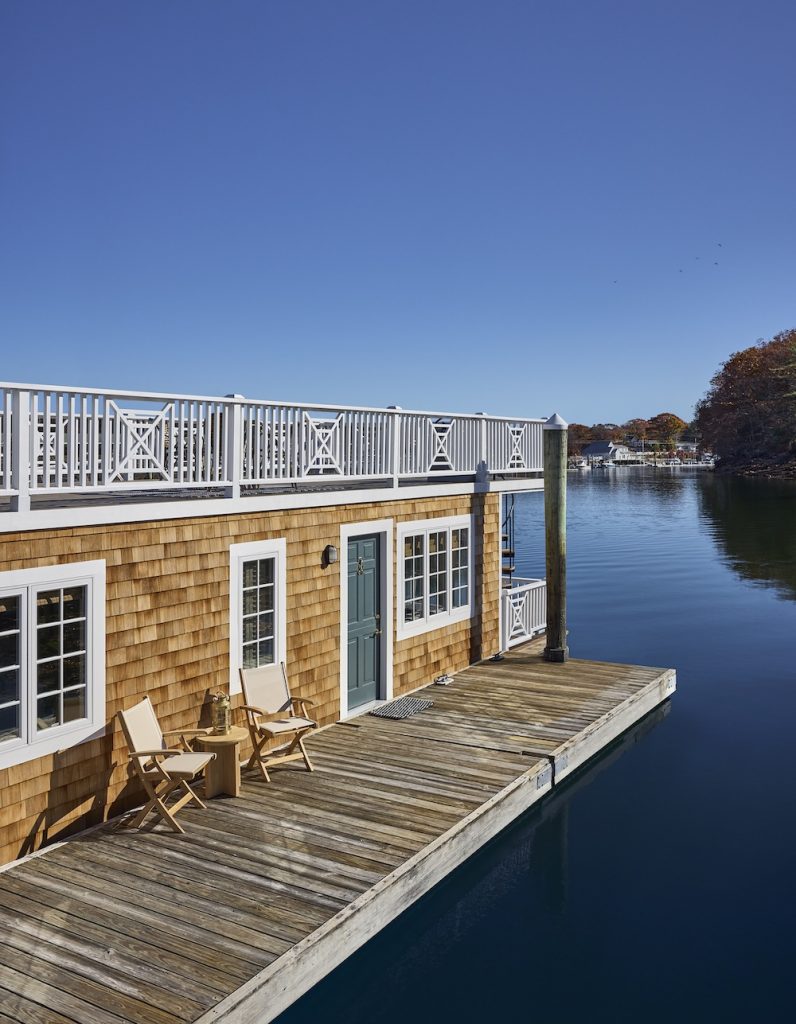
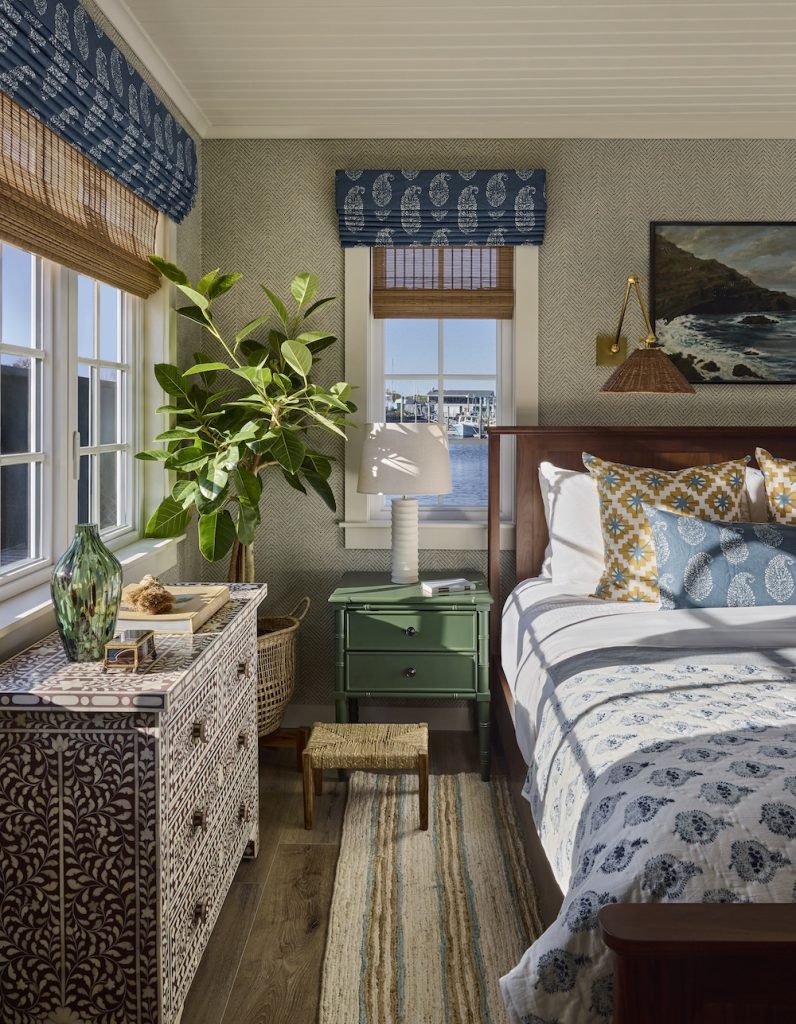
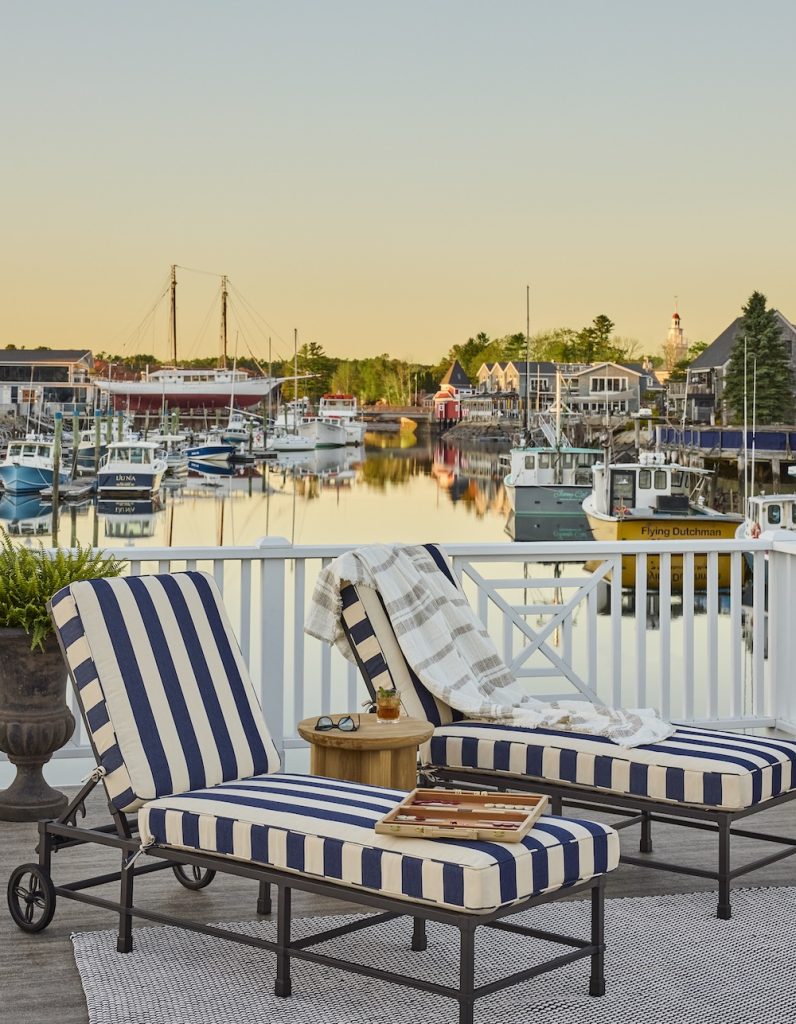
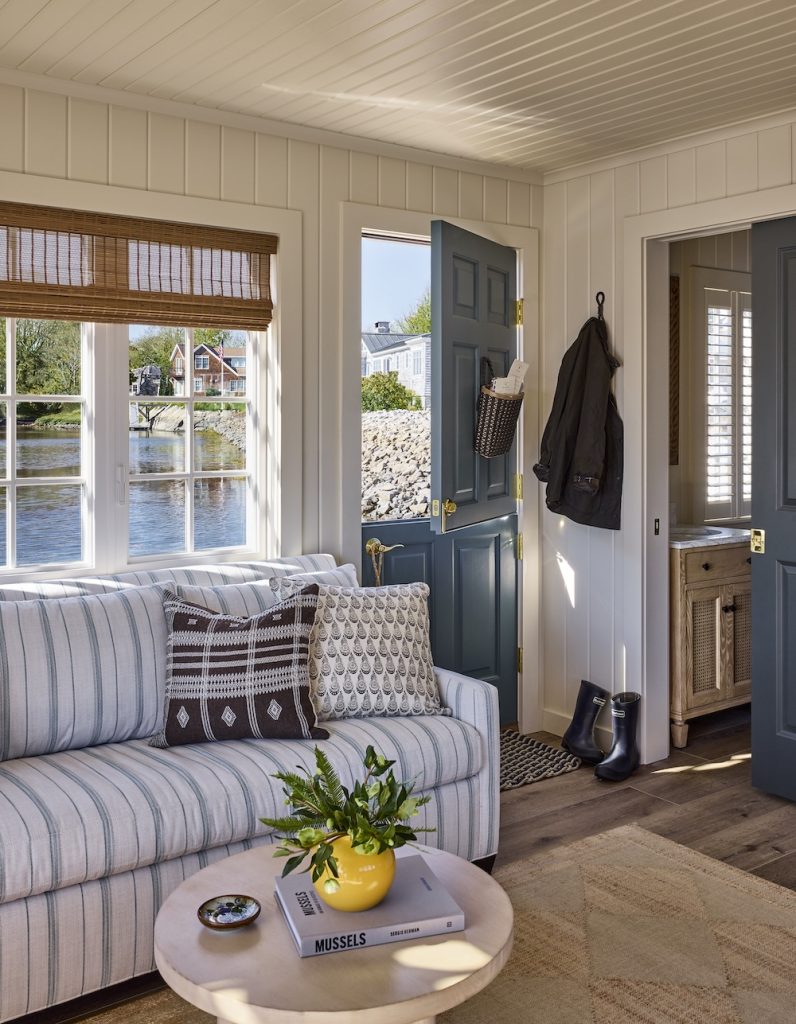
Her latest project is close to her heart: White Barn Inn’s new houseboats. For Wolf, who grew up in Hilton Head, South Carolina, weekends were spent with her father on his sailboat. “I grew up on the water,” she says. “My dad was a big boater.” When the call came to lend her prowess to the hotel’s Cora Houseboat, she had a well of personal experience from which to tap.
Drawing from her Southern roots, the project was a chance to meld her worlds together, amalgamating The Huntress’ English countryside charm with the White Barn Inn’s coastal aesthetic. “The direction for it was so interesting because it’s not overly nautical,” she says. “It was like creating an extension of the hotel onto the boat.” Rather than treating it like a traditional houseboat, Wolf wanted to give the floating accommodations a feeling of a cottage on the water. “You really don’t feel like you’re on a boat when you’re on it,” she says. “Then you go outside!”