

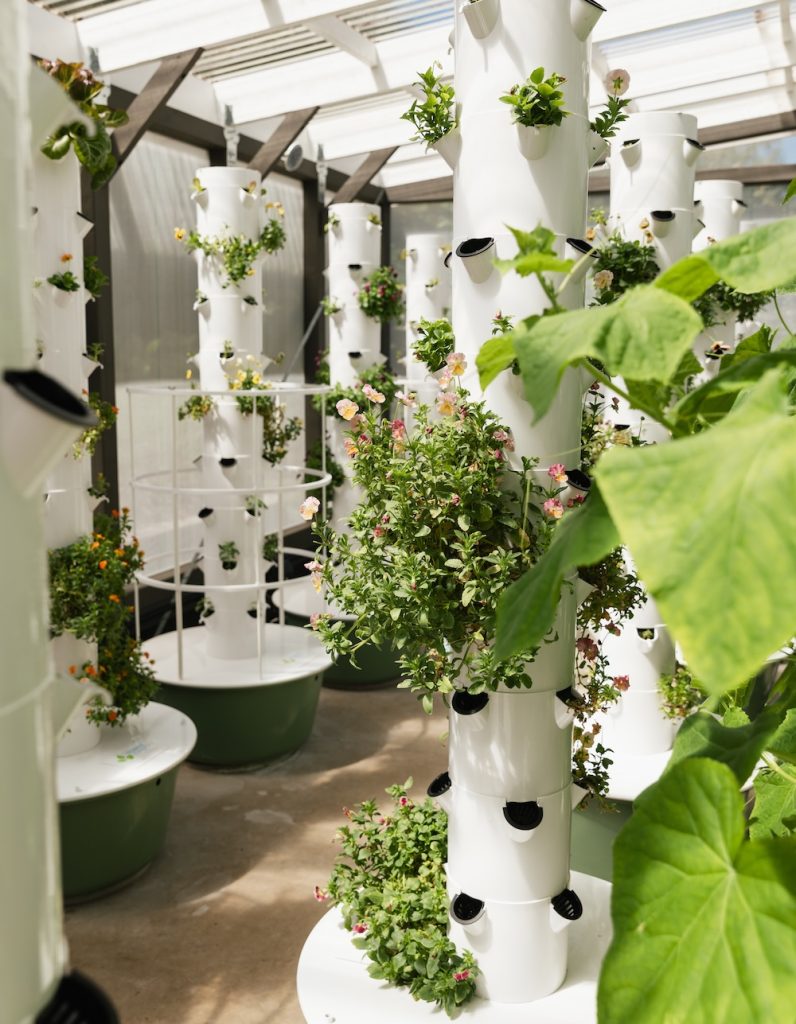
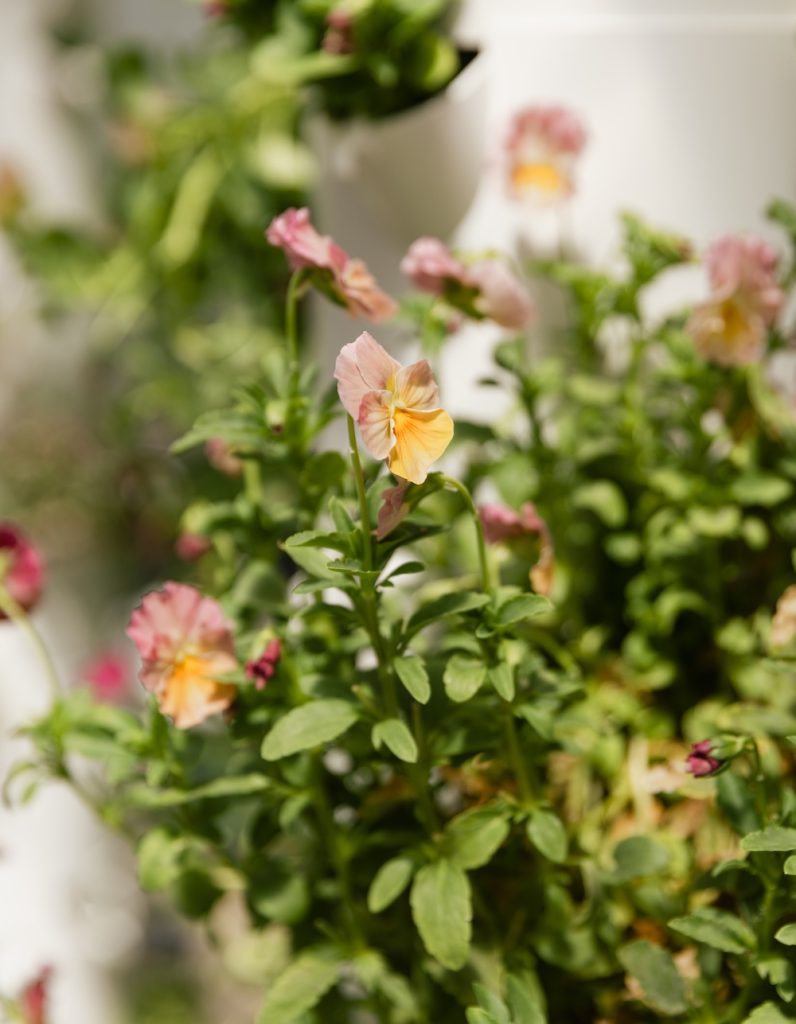
At Calabash Farm in Hawi, near the northern tip of Hawai’i Island, the route to the produce passes through an art gallery. The works lining its walls, many by local artists, come from the collection of Tiffany and Tim Shafto, the curator and artist behind DeEtte & Allan. Inside the hydroponic greenhouse, the produce is as carefully composed as the artwork: vibrant, lime-green mojito cucumbers dotted with sunny yellow blossoms; lacy sprays of flowering cilantro; kohlrabi in shades of plum and pale jade, broad leaves fanning gracefully from each sculptural globe. Beyond the gardens, the property opens toward the ocean, a breeze winding through the flourishing papaya plants and dragon fruit that dangles from trellises.
Chef Rhoda Magbitang says Calabash’s avocados are among the creamiest she’s tasted, their gradations of green so precise that “it looks like an illustration,” she says. “I was just floored by the stuff that they are growing, and the set-up is beautiful.”
For Magbitang—the executive chef of CanoeHouse at Mauna Lani, Auberge Collection, and winner of the latest season of Bravo’s Top Chef—sourcing ingredients locally isn’t just a virtue; it’s a guiding principle. She grew up in the Philippines and has worked in acclaimed kitchens, including at The Inn at Mattei’s Tavern, Auberge Collection, in Los Olivos, California.

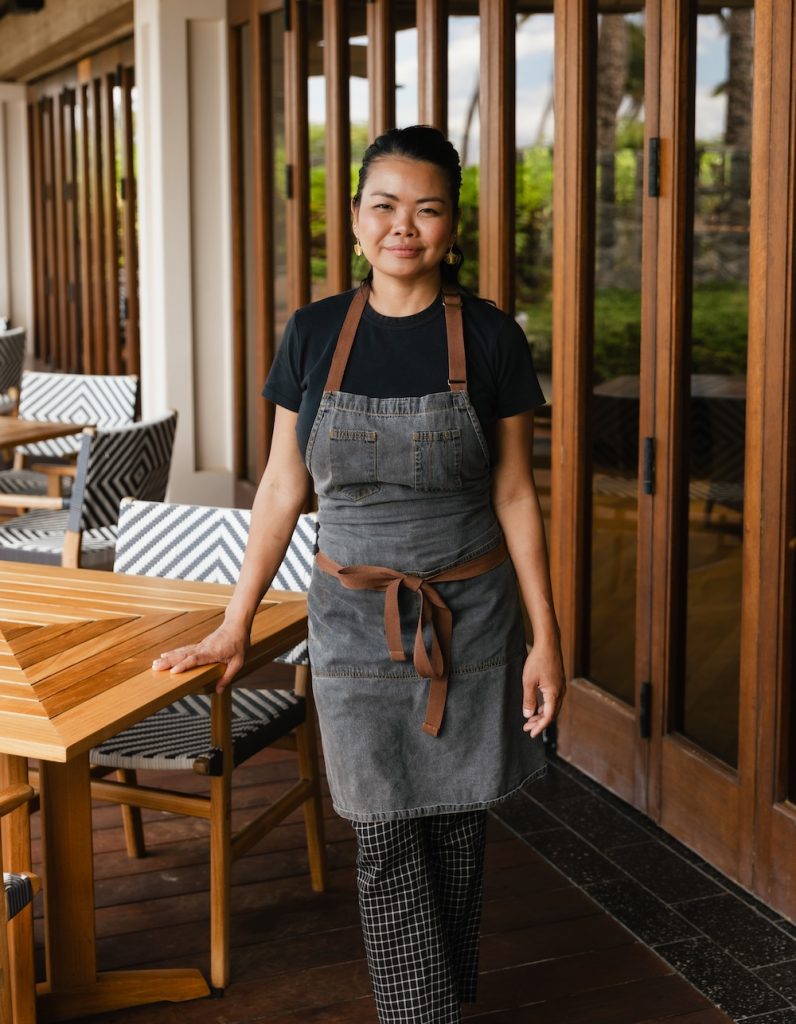
Cooking on the Island of Hawai’i, though, demands a different kind of flexibility, as Magbitang seeks out nearby ingredients at their peak—and lets them inspire her dishes. “We’re trying to mold ourselves into what this island can give us,” she says. “Not the other way around.” Magbitang carried that philosophy through each Top Chef challenge. “In a way, that’s always how I have approached my style of cooking,” she says. In the season premiere, that meant taking North Carolina sweet potatoes and filtering them through her own history, transforming the state’s signature crop into a soy-glazed homage to Filipino camote cue—a dish that earned her the first elimination challenge win of the season.

Magbitang followed that victory with another elimination-challenge win in episode two, becoming the first contestant in Top Chef history to claim the season’s first two elimination challenges. The rest, of course, is history: In June, she was crowned the show’s first Filipina champion and the first woman to take the title since Season 17.
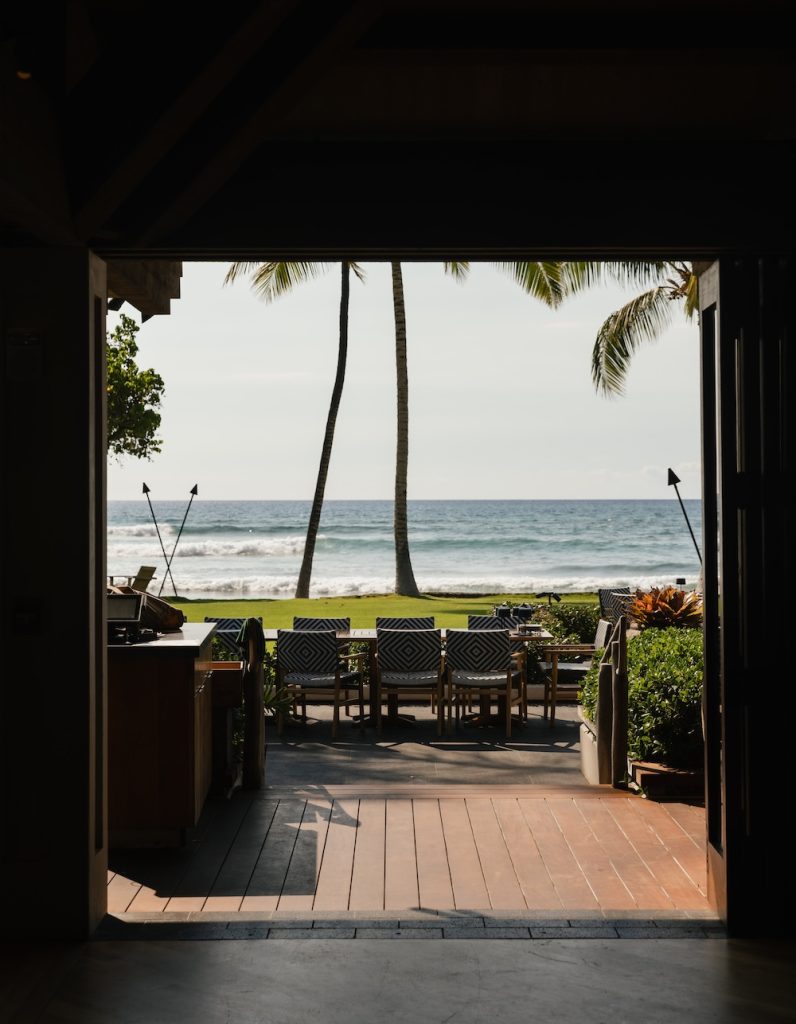
Back on Hawai’i Island, Magbitang puts the philosophy that led her to Top Chef glory into practice through an ever-evolving roster of nearby purveyors. The approach builds on CanoeHouse’s long connection to local sourcing—the restaurant opened in 1989 and, drawing on island farmers and fishermen, became an early home of Hawai’i Regional Cuisine. With Calabash Farm, that tradition continues through an uncommonly close partnership between chef and dedicated growers like the Shaftos of Calabash Farm.
Sometimes the bitter greens go into Magbitang’s tongue-in-cheek Chef’s Salad, which changes with the farm’s bounty. Shafto’s beets, kohlrabi, radishes, and whatever else is ready to harvest are shaved and tossed with a seaweed-anchovy vinaigrette, dates, and Parmesan—a loose, island-grown riff on the classic Caesar. On one occasion, it included Calabash’s water eggplant, which Magbitang says eats like a spongy apple and, much to some diners’ surprise, is tender enough to eat raw. “It’s delicious,” she says.

Calabash Farm is so small that Shafto is only able to supply produce for CanoeHouse, and the restaurant doesn’t place conventional orders by quantity. “Whatever is ready to harvest, she’s going to harvest and give to us,” Magbitang says, adding, “and we’re going to figure out what to do with it.”
The entirety of a small farm’s green bean crop might last the kitchen a few days or weeks. To keep a harvest from disappearing after a service or two, Magbitang and her team often preserve ingredients at their peak. Thus, Calabash’s mojito cucumbers are fermented into kimchi; microseasonal fruits—wild passion fruit, mangoes, jackfruit, mangosteens, and guanabana, or soursop—become vinegars and other souring agents. “We’re building this crazy pantry of different ferments,” Magbitang says. “You have to be careful: Hawai’i’s humidity is naturally conducive to fermentation, and microbiomes develop with minimal intervention.”
One tub in the walk-in is filled with banana ketchup made from Hawaiian blue bananas. The batch is still fermenting, and Magbitang is considering how best to use it in a dish. The recipe connects the island’s produce to a Philippine condiment the chef grew up eating. She remembers the Filipino staple as intensely red, sweet, and a little spicy—a creative response to a lack of tomatoes during the World War II era. Like much of CanoeHouse’s preservation program, it shows how constraint can spur invention and connects a taste from Magbitang’s childhood with the ingredients of her new home.
That same instinct—using what a place provides to express something personal—also shaped Magbitang’s cooking on Top Chef. At CanoeHouse, she sees room to explore it further. “I think CanoeHouse could be a great canvas for that style of cooking,” she says.

While Calabash Farm is one of Magbitang’s most closely held sourcing relationships, it’s only one part of the network shaping the CanoeHouse menu. At the sprawling Honolulu Fish Auction on the island’s Pier 38—the only fresh-tuna auction of its kind in the country—a brass bell rings at 5:30 a.m. six mornings every week to signal the start of the fish auction. The catch is weighed, tagged, and presented on iced pallets, then sold to buyers representing wholesalers, retailers, distributors, and restaurants. The floor runs about three-quarters of a football field and stays cold enough that buyers work in parkas at dawn, moving down the rows before bidding to inspect the massive, glistening fish.
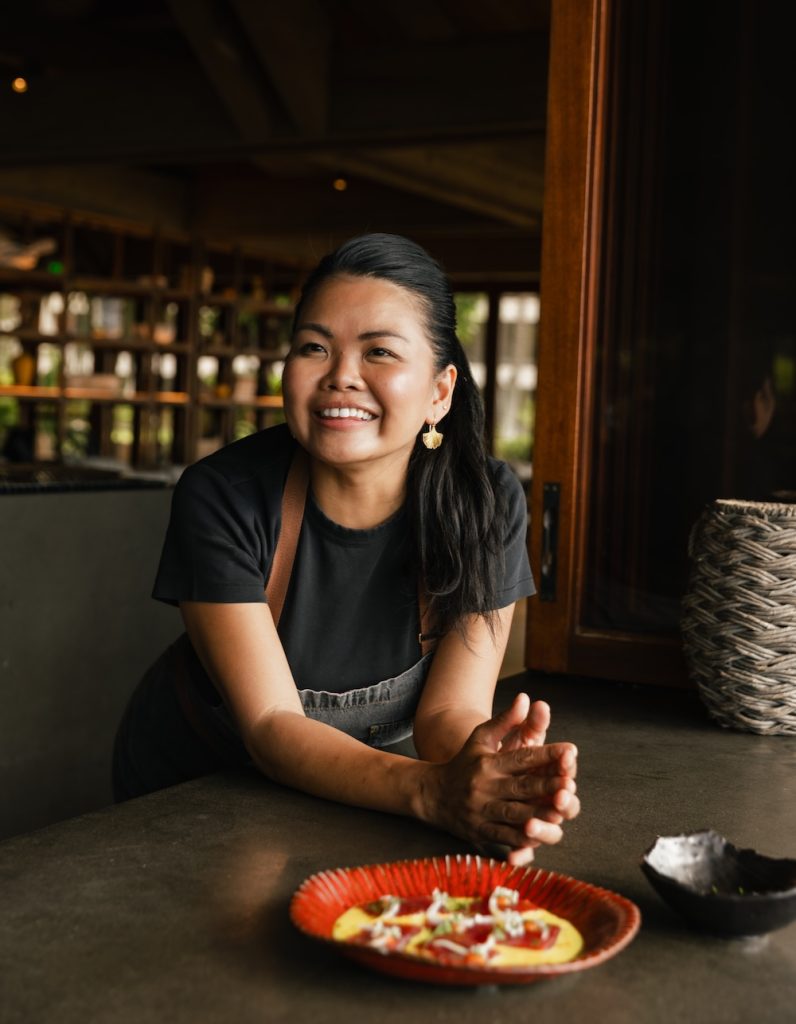
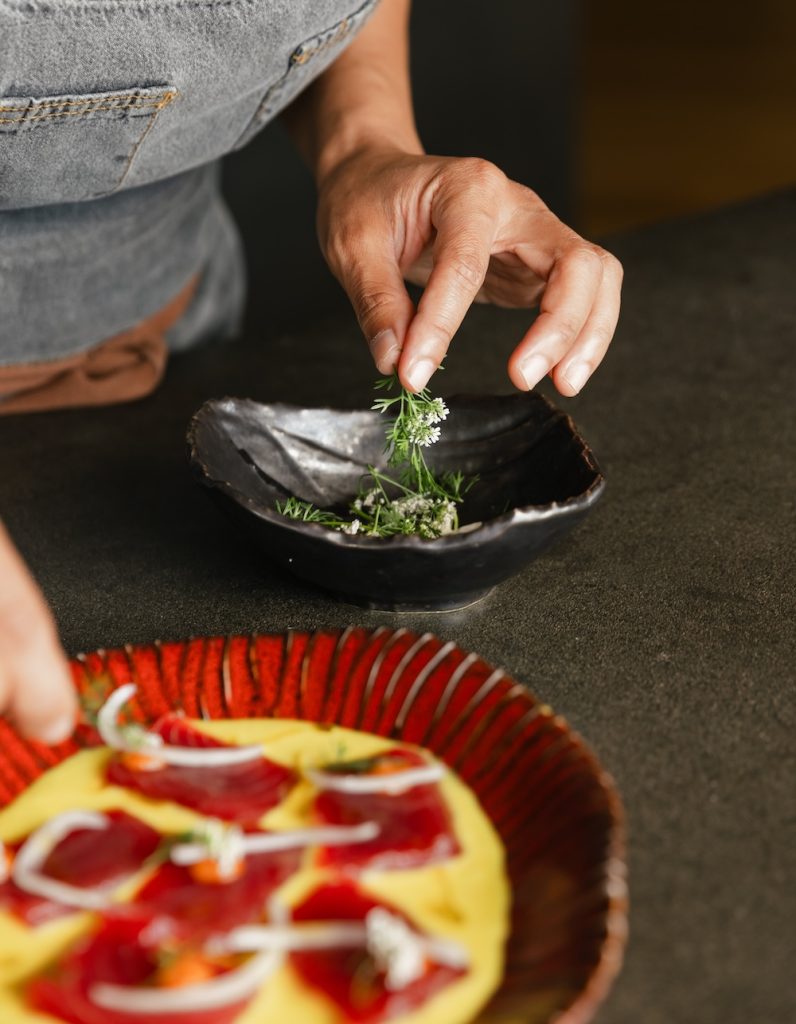
Tuna is the main event—with tails cut so the fish can be graded, from one to three for color, texture, and fat content. But the boats also land mahi-mahi, opah, ono, monchong, snapper, swordfish, and other fish caught alongside it. “The bycatch is so pretty,” Magbitang says. “It almost doesn’t deserve that term.”
Whatever ultimately reaches CanoeHouse becomes a rotating fresh-catch preparation, paired with vegetables from island farms. One day that may mean mahi or opah, or smaller snappers served whole. As with Calabash Farm, Magbitang’s kitchen team responds to what arrives, drawing on honed technique to bring out each ingredient’s character. In the whole-fish dish, the two sides of her sourcing network meet on the plate, with fish from the auction accompanied by tangy kimchi made from Shafto’s mojito cucumbers.

Most CanoeHouse diners are visitors, and Magbitang knows they’re not always coming to dinner looking for a new perspective on local cuisine. “There’s a typical expectation that when you feed people who are vacationing, they don’t want to think about what they’re eating,” she says. Still, she hopes the meal broadens their sense of what Hawaiian cuisine can be. “I would love for our guests to leave knowing that the food here is dynamic.”
Sometimes that message arrives as a plate of just-caught sashimi; other times as raw eggplant grown in an art dealer’s greenhouse. And when the kitchen gets only three guanabanas—far too few to anchor a dish—the team turns them into vinegar, extending one tiny harvest to dozens and dozens of plates. It’s a small but mighty endeavor that brings authentic flavor, in countless forms, to every dish. “When we get something this special in the kitchen, we want to use it thoughtfully,” Magbitang says. “We are so lucky to have this abundance.”
